Bicycle Accidents

A collision between a bicycle and a motor vehicle can change a person’s life in seconds. Unlike drivers and passengers inside cars, bicyclists have very little protection from the force of an impact. A rider struck by a car, SUV, commercial truck, rideshare vehicle, or opening vehicle door may suffer a traumatic brain injury, spinal injury, fractures, road rash, internal injuries, permanent disability, or fatal injuries.

Russell & Lazarus APC represents people injured in bicycle accidents throughout California. Our bicycle accident lawyers serve clients through offices in Newport Beach, Mission Viejo, Long Beach, Riverside, Laguna Niguel, Fullerton, Sacramento, and San Diego.
Whether you were hit while commuting to work, riding recreationally, traveling through an intersection, using a bicycle lane, riding along the California coast, or participating in a group ride, the cause of the collision should be carefully investigated before an insurance company decides who was responsible.
If another driver caused your bicycle accident, contact Russell & Lazarus for a complimentary case evaluation.
Bicycle Accidents Remain a Serious Traffic Safety Problem
Bicyclists are among the most vulnerable people using California roads. According to the National Highway Traffic Safety Administration, 1,103 bicyclists were killed in traffic crashes nationwide in 2024. NHTSA also reports that nearly three-quarters of bicyclist fatalities occur in urban areas.
You can review current information from the National Highway Traffic Safety Administration Bicycle Safety Program.
California’s combination of densely populated cities, high-speed arterial roads, coastal cycling routes, commercial traffic, tourists, rideshare vehicles, delivery drivers, and extensive bicycle commuting creates many situations where cyclists and motor vehicles must safely share the road.
A bicycle collision does not need to occur at freeway speed to produce a severe injury. A cyclist may be thrown onto asphalt, into another vehicle, against a curb, or beneath a vehicle after even a relatively low-speed impact.
Common Causes of Bicycle Accidents in California
Bicycle accidents can occur for many reasons, but collisions involving motor vehicles frequently result from a driver failing to recognize the cyclist, failing to yield, passing too closely, entering a bicycle lane, opening a vehicle door, or making an unsafe turn.
Common causes of California bicycle accidents include:
- Drivers failing to yield to bicyclists
- Unsafe right turns across bicycle lanes
- Unsafe left turns in front of bicyclists
- Drivers entering or blocking bicycle lanes
- Motorists passing bicycles too closely
- Drivers opening vehicle doors into a cyclist’s path
- Distracted driving
- Texting or using a phone while driving
- Speeding
- Impaired driving
- Unsafe lane changes
- Failure to obey traffic signals or stop signs
- Rideshare and delivery drivers making sudden stops or turns
- Commercial trucks failing to see cyclists in blind spots
- Dangerous roadway conditions
- Potholes or damaged pavement
- Road construction hazards
- Defective bicycle components
- Hit-and-run drivers
Determining the precise cause can require reviewing photographs, video, vehicle damage, bicycle damage, witness statements, police reports, electronic vehicle data, traffic signals, roadway design, and other evidence.
Intersection Bicycle Accidents
Intersections are particularly important in bicycle accident investigations because motorists and cyclists may be traveling in several different directions while turning, crossing, merging, or entering bicycle lanes.
A driver turning right may cross directly through the path of a bicyclist traveling straight. A driver turning left may misjudge the cyclist’s speed and turn across the rider’s path. A driver leaving a driveway or parking lot may look for cars without recognizing an approaching bicycle.
Traffic-light timing, bicycle signals, pedestrian signals, lane markings, surveillance footage, witness statements, vehicle positions, and the location of impact may help determine how an intersection collision occurred.
Right-Turn Bicycle Accidents
A common bicycle collision occurs when a motorist turns right across the path of a cyclist traveling in the same direction. These crashes are sometimes referred to as right-hook accidents.
A cyclist may be traveling legally within a bike lane when the motorist enters the lane to turn. The important questions may include whether the driver checked mirrors and blind spots, signaled, properly entered the bicycle lane, recognized the cyclist, and allowed enough time and distance to complete the maneuver safely.
Video from nearby businesses, dashboard cameras, traffic cameras, and other vehicles can be particularly useful in determining how a right-turn accident occurred.
Left-Turn Bicycle Accidents
A cyclist can also be seriously injured when an approaching driver makes a left turn across the cyclist’s path.
Drivers sometimes underestimate the speed of an approaching bicycle or fail to recognize the bicycle entirely. The resulting collision may cause the cyclist to strike the side of the vehicle or be directly struck by the turning vehicle.
Accident reconstruction may be necessary when the parties disagree about speed, visibility, traffic signals, or right of way.
Bicycle Door Accidents
A cyclist riding next to parked vehicles can be seriously injured when a driver or passenger suddenly opens a door into the cyclist’s path. This type of crash is commonly known as a dooring accident.
California Vehicle Code Section 22517 provides that a person may not open a vehicle door on the side available to moving traffic unless it is reasonably safe and can be done without interfering with moving traffic.
Review California Vehicle Code Section 22517.
A cyclist may have only seconds to react to an opening door. The rider may strike the door directly, be thrown into traffic, or swerve into another moving vehicle.
Unsafe Passing Accidents and California’s Three Feet for Safety Act
California provides specific protections for bicyclists being passed by motor vehicles.
California Vehicle Code Section 21760, known as the Three Feet for Safety Act, generally prohibits a motorist from passing a bicycle traveling in the same direction with less than three feet between the motor vehicle and the bicycle or rider.
The current law also provides that when a bicycle and vehicle are traveling in the same lane and another lane traveling in the same direction is available, the motorist should change into the available lane before passing when doing so is practicable, safe, and not prohibited by law.
If roadway or traffic conditions prevent compliance with the three-foot requirement, the driver must slow to a reasonable and prudent speed and may pass only when the maneuver will not endanger the cyclist.
Review California Vehicle Code Section 21760.
Drivers Entering Bicycle Lanes
Dedicated bicycle lanes are intended to provide cyclists with space separated from ordinary vehicle travel lanes, although vehicles may enter bike lanes under limited circumstances.
California Vehicle Code Section 21209 generally prohibits motorists from driving in an established bicycle lane except for specified purposes, including parking where permitted, entering or leaving the roadway, or preparing for a turn within 200 feet of an intersection.
Review California Vehicle Code Section 21209.
A driver who unexpectedly moves into a bicycle lane can leave a rider with almost no time or space to avoid a collision.
What Rights Do Bicyclists Have on California Roads?
California Vehicle Code Section 21200 generally provides that a person riding a bicycle on a highway has the rights and is subject to the provisions applicable to drivers of vehicles, except for provisions that by their nature cannot apply to bicycles.
Review California Vehicle Code Section 21200.
This is an important concept after a bicycle collision. A cyclist does not automatically have fewer roadway rights merely because the cyclist is using a bicycle instead of a motor vehicle.
At the same time, bicyclists must obey applicable traffic laws. Fault should therefore be determined by examining what both the driver and cyclist were doing immediately before the accident.
Do California Bicyclists Always Have to Ride at the Far Right?
No. California law is more nuanced than simply requiring cyclists to remain at the far-right edge of the roadway at all times.
California Vehicle Code Section 21202 generally requires a cyclist traveling slower than normal traffic to ride as close as practicable to the right-hand curb or edge, but the statute includes important exceptions.
A bicyclist may move away from the right side when:
- Passing another bicycle or vehicle
- Preparing for a left turn
- Avoiding fixed or moving objects
- Avoiding pedestrians or animals
- Avoiding surface hazards
- The lane is too narrow for a bicycle and vehicle to travel safely side by side
- Approaching a place where a right turn is authorized
Review California Vehicle Code Section 21202.
This distinction can become important when an insurance company argues that a cyclist was automatically at fault simply because the rider was farther into the travel lane.
California Bicycle Helmet Law
California Vehicle Code Section 21212 generally requires bicycle riders and bicycle passengers under age 18 to wear a properly fitted and fastened bicycle helmet meeting applicable safety standards when riding on a street, bikeway, public bicycle path, or trail.
Review California Vehicle Code Section 21212.
California does not impose that same statewide bicycle helmet requirement on ordinary adult bicycle riders under this statute.
Helmet use can reduce the risk and severity of certain head injuries, but failure to wear a helmet does not automatically determine who caused a collision. A negligent driver who strikes a cyclist may still be legally responsible for causing the underlying accident.
Can Bicyclists Ride on the Sidewalk in California?
Sidewalk bicycle rules can vary by city because local ordinances may regulate where bicycles can be ridden on sidewalks or within particular commercial districts.
A cyclist injured in Newport Beach, Long Beach, Riverside, Sacramento, San Diego, Fullerton, Mission Viejo, or Laguna Niguel should not assume that the same local sidewalk rule applies everywhere in California.
When sidewalk riding is relevant to an accident, the ordinance applicable at the exact accident location should be reviewed.
Hit-and-Run Bicycle Accidents
A bicycle accident can become even more difficult when the driver leaves the scene.
After a hit-and-run bicycle crash, potentially useful evidence may include:
- Witness descriptions
- Partial license plate information
- Vehicle color and model
- Business surveillance footage
- Residential security cameras
- Dashboard-camera footage
- Traffic cameras
- Photographs of debris left at the scene
- Police reports
Insurance coverage should also be reviewed. Depending on the policy, insured status, and circumstances, uninsured motorist coverage may potentially become relevant even though the injured person was riding a bicycle rather than occupying an automobile.
Commercial Truck and Delivery Vehicle Bicycle Accidents
Large commercial vehicles can create particular dangers for cyclists because trucks have significant blind spots and require additional space to turn and stop.
A bicycle accident involving a commercial truck may require investigation of the truck driver, employer, trucking company, vehicle owner, maintenance provider, and other parties.

Evidence can include electronic logging information, driver qualification records, onboard cameras, GPS records, vehicle inspection documents, maintenance records, and electronic vehicle data.
Learn more through the Russell & Lazarus Truck Accident Lawyer resource.
Rideshare and Delivery Driver Bicycle Accidents
Uber, Lyft, food-delivery, package-delivery, and other app-based drivers frequently travel through dense residential and commercial areas where cyclists are also present.
Drivers may be looking at navigation systems, searching for passengers, stopping near curbs, entering bicycle lanes, opening doors, or making sudden turns.
When a rideshare driver strikes a cyclist, insurance coverage may depend in part on the driver’s status within the rideshare application at the time of the collision.
Additional information is available through the Russell & Lazarus Uber and Lyft Accident Lawyer page.
What Should You Do After a Bicycle Accident?
The moments following a bicycle accident can be confusing, particularly when a rider has suffered a head injury or has been thrown onto the roadway.
When possible and safe, important steps include:
- Call 911 when emergency assistance is needed
- Obtain medical treatment
- Report the collision to law enforcement
- Obtain the driver’s name and insurance information
- Photograph the vehicle and bicycle
- Photograph the roadway and bicycle lane
- Photograph skid marks, debris, signs, and traffic signals
- Identify witnesses
- Preserve your helmet, bicycle, clothing, and damaged equipment
- Save medical records and expenses
- Save communications with insurance companies
A severely injured cyclist should focus first on medical care rather than attempting to personally collect evidence at a dangerous crash scene.
Why Should the Bicycle Be Preserved?
The damaged bicycle can provide physical evidence showing how the collision occurred.
Damage to the frame, wheels, fork, handlebars, pedals, seat, lights, and other components may help an accident reconstruction specialist determine the direction and force of impact.
Do not automatically repair or dispose of a bicycle involved in a serious accident before considering whether it needs to be photographed, measured, or inspected.
The cyclist’s helmet, torn clothing, electronic bicycle computer, GPS device, smartwatch, or action camera may also contain useful evidence.
Digital Evidence in Bicycle Accident Cases
Modern bicycle accident investigations may involve much more than a police report.
Potential digital evidence includes:
- Garmin or cycling computer records
- Strava ride information
- GPS data
- Smartwatch information
- GoPro or action-camera footage
- Vehicle dashboard cameras
- Business surveillance footage
- Residential doorbell cameras
- Vehicle electronic data
- Cell phone information when legally relevant
Some digital records are overwritten or deleted quickly, which is one reason early evidence preservation can be important.
Who Is at Fault in a California Bicycle Accident?
There is no automatic rule that assigns fault to either the motorist or bicyclist.
Responsibility depends on the conduct of each party and the circumstances surrounding the collision.
An investigation may examine:
- Who had the right of way
- Traffic signals and signs
- Whether a motorist entered a bicycle lane
- Whether a driver passed too closely
- Whether either party was distracted
- Vehicle and bicycle speed
- Visibility and lighting
- Roadway configuration
- Witness statements
- Video evidence
Police reports can provide valuable information, but they do not necessarily resolve every issue of civil liability.
What Is Comparative Fault in a Bicycle Accident?
California follows comparative fault principles. This means more than one party can potentially share responsibility for an accident.
For example, an insurance company might argue that a cyclist failed to signal, entered an intersection improperly, violated a traffic law, or was otherwise partly responsible.
Even when a cyclist is found partially responsible, that does not necessarily eliminate the entire personal injury claim. Compensation may instead be reduced according to the percentage of fault legally attributed to the cyclist.
The evidence should therefore be evaluated carefully before an injured rider accepts an insurance company’s assertion of fault.
What if a Dangerous Road or Bicycle Lane Caused the Accident?
Not every bicycle accident is caused solely by a motor vehicle driver.
A serious crash may involve:
- Large potholes
- Broken pavement
- Dangerous drainage grates
- Improperly designed bicycle lanes
- Construction debris
- Unsafe lane transitions
- Obstructed signs
- Dangerous roadway conditions
When a city, county, state agency, or other public entity owns or controls the roadway, special California government claim procedures may become relevant.
California Government Code Section 911.2 generally requires certain claims relating to personal injury or death against a public entity to be presented within six months after the claim accrues.
Review California Government Code Section 911.2.
Because government claims can involve substantially shorter deadlines than ordinary personal injury claims, potential public-entity involvement should be identified early.
Can a Defective Bicycle Cause an Accident?
Potentially. Bicycle crashes can occur when a frame, fork, wheel, brake, tire, handlebar, pedal, seat, or other critical component fails.
A product liability investigation may examine whether the bicycle or component contained a manufacturing defect, design defect, or inadequate warning.
The bicycle and failed component should be preserved when possible because engineers may need to inspect the physical evidence.
Learn more through the Russell & Lazarus Product Liability Attorney resource.
Common Bicycle Accident Injuries
Bicyclists may suffer serious injuries because there is little physical protection between the rider and the roadway or vehicle.
Common bicycle accident injuries include:
- Traumatic brain injuries
- Concussions
- Facial injuries
- Dental injuries
- Neck injuries
- Spinal cord injuries
- Spinal fractures
- Herniated discs
- Shoulder injuries
- Broken arms and wrists
- Broken legs and ankles
- Pelvic fractures
- Internal injuries
- Nerve damage
- Road rash
- Scarring and disfigurement
- Permanent disability
People suffering head trauma can review the Russell & Lazarus Traumatic Brain Injury resource.
Traumatic Brain Injuries After Bicycle Accidents
A cyclist thrown from a bicycle may strike the pavement, vehicle, curb, or another object with substantial force.
A traumatic brain injury may occur even when there is no skull fracture and even when the rider did not lose consciousness.
Potential symptoms can include:
- Headaches
- Dizziness
- Memory problems
- Difficulty concentrating
- Confusion
- Changes in mood or personality
- Sleep problems
- Vision problems
- Balance problems
- Sensitivity to light or sound
A cyclist experiencing neurological symptoms after an accident should obtain appropriate medical evaluation.
What Compensation Can a Bicycle Accident Victim Recover?
There is no standard settlement amount for a California bicycle accident. Compensation depends on liability, the severity of the injuries, medical treatment, future care, lost income, insurance coverage, permanent limitations, and other circumstances.
Potential damages may include:
- Ambulance expenses
- Emergency room treatment
- Hospitalization
- Surgery
- Diagnostic imaging
- Physical therapy
- Rehabilitation
- Medication
- Future medical care
- Lost wages
- Reduced future earning capacity
- Bicycle replacement or repair
- Damaged cycling equipment
- Physical pain
- Emotional distress
- Loss of normal activities
- Scarring and disfigurement
- Permanent disability
Severe cases may require medical experts, vocational specialists, economists, life-care planners, or other professionals to evaluate future losses.
What Happens When a Bicycle Accident Causes a Death?
A collision between a bicycle and motor vehicle can cause fatal injuries, particularly when the cyclist is struck by a large SUV, pickup truck, commercial vehicle, or high-speed vehicle.
When another party’s wrongful conduct causes a cyclist’s death, qualifying surviving family members may potentially pursue a California wrongful death claim.
Potential damages may involve funeral and burial expenses, financial support, household services, and legally recognized losses involving companionship, care, assistance, guidance, protection, affection, and moral support.
Learn more through the Russell & Lazarus Wrongful Death Attorneys resource.
How Long Do You Have to File a Bicycle Accident Lawsuit in California?
California Code of Civil Procedure Section 335.1 generally provides two years for an action involving injury to or death of an individual caused by another person’s wrongful act or neglect.
Review California Code of Civil Procedure Section 335.1.
However, not every bicycle accident has the same deadline. Claims involving public entities, minors, particular defendants, or other circumstances may be governed by different rules.
A claim involving a dangerous public roadway or bicycle-lane condition may require government claim presentation within approximately six months under applicable California law.
Evidence can also disappear long before a legal deadline expires, making prompt investigation important.
How Russell & Lazarus Investigates a Bicycle Accident
A bicycle accident claim should be developed around evidence rather than assumptions.
Depending on the case, an investigation may include:
- Reviewing the police report
- Interviewing witnesses
- Obtaining surveillance video
- Locating dashboard-camera footage
- Inspecting bicycle and vehicle damage
- Analyzing the collision location
- Reviewing traffic signals and roadway markings
- Preserving electronic information
- Reviewing medical records
- Documenting lost income
- Identifying available insurance policies
- Consulting appropriate experts when necessary
Learn more about the firm’s litigation approach through How Russell & Lazarus Prepares Your Case.
Russell & Lazarus Bicycle Accident Case Results
Russell & Lazarus has represented cyclists injured in motor vehicle collisions and publishes selected Bicycle Accident Case Results.
In one published case, a 50-year-old cyclist was riding in Los Angeles when a tow truck driver swerved into the cyclist’s path, causing the rider to collide with the truck. After litigation and a five-day trial, Russell & Lazarus obtained a $500,000 jury verdict for the client.
Every bicycle accident is different. Prior settlements, verdicts, and results do not guarantee or predict the outcome of another case.
California Bicycle Accident Lawyers Near You
Russell & Lazarus represents cyclists throughout Southern California and Northern California through eight office locations. Local bicycle accident claims are strengthened by understanding the streets, traffic patterns, bicycle infrastructure, intersections, and communities where a collision occurred.
Newport Beach Bicycle Accident Lawyer
Newport Beach has substantial recreational and commuter cycling activity near Pacific Coast Highway, Newport Coast Drive, Jamboree Road, MacArthur Boulevard, San Joaquin Hills Road, Newport Center Drive, Corona del Mar, Balboa Peninsula, Balboa Island, and the Upper Newport Bay area.
Traffic can include residents, tourists, delivery vehicles, rideshare drivers, commercial trucks, beach traffic, and cyclists sharing the same streets.
A Newport Beach bicycle accident may involve a driver turning across a bike lane, passing too closely, opening a vehicle door, failing to yield at an intersection, or striking a cyclist while distracted.
Russell & Lazarus has longstanding ties to Newport Beach bicycle safety issues and has published information concerning cyclist safety in Newport Beach.
Contact the Newport Beach office at (949) 851-0222.
Mission Viejo Bicycle Accident Lawyer
Russell & Lazarus represents cyclists throughout Mission Viejo and surrounding South Orange County communities, including Lake Forest, Rancho Santa Margarita, Ladera Ranch, Aliso Viejo, and Laguna Hills.
Major local roads include Marguerite Parkway, Alicia Parkway, Crown Valley Parkway, Santa Margarita Parkway, Oso Parkway, and nearby Interstate 5 connections.
Wide arterial roads, intersections, shopping centers, schools, residential communities, and commuter traffic can create situations where motorists and cyclists frequently interact.
Contact the Mission Viejo office at (949) 309-0990.
Long Beach Bicycle Accident Lawyer
Long Beach has significant bicycle activity throughout Downtown Long Beach, the waterfront, Belmont Shore, Naples, university areas, residential neighborhoods, and commercial districts.
Major roads where motorists and cyclists may interact include Ocean Boulevard, Pacific Coast Highway, Long Beach Boulevard, Atlantic Avenue, Bellflower Boulevard, Anaheim Street, and Second Street.
Long Beach bicycle accidents may involve passenger vehicles, rideshare drivers, delivery vehicles, buses, commercial trucks, parked-car doors, pedestrians, and other cyclists.
Contact the Long Beach office at (562) 496-1997.
Riverside Bicycle Accident Lawyer
Russell & Lazarus represents injured cyclists throughout Riverside and the Inland Empire.
Riverside bicycle accidents may occur near Magnolia Avenue, University Avenue, Arlington Avenue, Van Buren Boulevard, Market Street, Mission Inn Avenue, Victoria Avenue, university areas, residential neighborhoods, and commercial corridors.
The region’s combination of passenger traffic, commercial trucks, warehouses, construction, commuting, and high-speed arterial roads can make bicycle collisions particularly serious.
A claim involving a defective public bicycle lane, road surface, drainage structure, or roadway design may also require evaluation of government claim procedures.
Contact the Riverside office at (951) 485-4000.
Laguna Niguel Bicycle Accident Lawyer
The Laguna Niguel office serves cyclists throughout Laguna Niguel, Dana Point, Laguna Beach, Laguna Hills, Aliso Viejo, and San Juan Capistrano.
Cyclists frequently travel throughout South Orange County near Crown Valley Parkway, Alicia Parkway, Moulton Parkway, Niguel Road, Pacific Coast Highway, coastal routes, residential areas, and connecting bike routes.
Bicycle accidents in these communities may involve recreational cyclists, cycling groups, commuters, e-bike riders, tourists, passenger vehicles, rideshare drivers, and commercial vehicles.
Contact the Laguna Niguel office at (949) 426-7299.
Fullerton Bicycle Accident Lawyer
Russell & Lazarus represents bicyclists throughout Fullerton and North Orange County, including Anaheim, Brea, Buena Park, La Habra, Placentia, and surrounding communities.
Major roads include Harbor Boulevard, Chapman Avenue, Commonwealth Avenue, Orangethorpe Avenue, Bastanchury Road, Imperial Highway, and streets surrounding Downtown Fullerton and local colleges.
North Orange County also has substantial commuter, commercial, university, entertainment, and tourist traffic, creating frequent interaction among cyclists, cars, buses, trucks, pedestrians, and rideshare vehicles.
Contact the Fullerton office at (714) 772-9700.
Sacramento Bicycle Accident Lawyer
Sacramento has extensive bicycle commuting and recreational cycling activity throughout Downtown Sacramento, Midtown, residential neighborhoods, university areas, river corridors, and regional bicycle paths.
Local bicycle accidents may occur near J Street, Broadway, Capitol Mall, Stockton Boulevard, 16th Street, urban intersections, public transit areas, and routes connecting to the American River Parkway and surrounding communities.
A Sacramento bicycle accident may involve a passenger vehicle, rideshare driver, commercial truck, public vehicle, dangerous intersection, defective bike lane, or other road condition.
When a city, county, or other public entity may be responsible for a dangerous roadway condition, California’s shortened government claim requirements should be considered promptly.
Contact the Sacramento office at (916) 299-3999.
San Diego Bicycle Accident Lawyer
Russell & Lazarus represents cyclists throughout San Diego County, including San Diego, Carlsbad, Chula Vista, Coronado, Del Mar, El Cajon, Encinitas, Escondido, Imperial Beach, La Mesa, Lemon Grove, National City, Oceanside, Poway, San Marcos, Santee, Solana Beach, Vista, and surrounding communities.
San Diego County has substantial bicycle activity associated with coastal routes, Downtown San Diego, university areas, beach communities, residential neighborhoods, parks, transit centers, tourism, and commuting.
Cyclists may encounter heavy traffic along Harbor Drive, Pacific Highway, Coast Highway, Camino Del Mar, coastal roads through Encinitas and Carlsbad, urban San Diego streets, and busy intersections throughout the county.
Potential cases include motorists entering bicycle lanes, unsafe passing, right-turn collisions, dooring accidents, distracted driving, commercial truck accidents, rideshare collisions, dangerous road conditions, and hit-and-run crashes.
Contact the San Diego office at (619) 986-0411.
Bicycle Accident Representation Throughout Orange County
Russell & Lazarus serves injured cyclists throughout Orange County, including Aliso Viejo, Anaheim, Anaheim Hills, Brea, Buena Park, Costa Mesa, Cypress, Dana Point, Fountain Valley, Fullerton, Garden Grove, Huntington Beach, Irvine, La Habra, La Palma, Laguna Beach, Laguna Hills, Laguna Niguel, Lake Forest, Mission Viejo, Newport Beach, Newport Coast, Orange, Placentia, Rancho Santa Margarita, San Clemente, San Juan Capistrano, Santa Ana, Seal Beach, Tustin, Westminster, Yorba Linda, and surrounding communities.

Orange County bicycle accidents can involve coastal cycling routes, residential roads, urban intersections, shopping areas, university traffic, high-speed arterial streets, bicycle lanes, recreational routes, and roads carrying substantial commuter traffic.
Bicycle Accident Representation Throughout San Diego County
The Russell & Lazarus San Diego office serves cyclists throughout San Diego County, including Carlsbad, Chula Vista, Coronado, Del Mar, El Cajon, Encinitas, Escondido, Imperial Beach, La Mesa, Lemon Grove, National City, Oceanside, Poway, San Diego, San Marcos, Santee, Solana Beach, Vista, and neighboring communities.
San Diego County cyclists may ride along coastal corridors, city bicycle lanes, residential streets, commercial districts, recreational trails, university areas, and busy commuting routes. Each accident should be investigated according to the exact roadway, traffic controls, local ordinance, bicycle infrastructure, and vehicles involved.
Why Choose Russell & Lazarus After a Bicycle Accident?
Bicycle accident claims require an understanding of both personal injury law and the circumstances that make cycling collisions different from ordinary vehicle crashes.
Important questions can include:
- Was the cyclist legally using the roadway?
- Did the driver violate California’s three-foot passing law?
- Did the motorist improperly enter the bicycle lane?
- Did a driver open a vehicle door unsafely?
- Was the cyclist visible?
- Was a dangerous roadway condition involved?
- Is there surveillance or electronic evidence?
- Is uninsured or underinsured motorist coverage available?
- Will the injuries require future medical treatment?
- Has the accident affected the cyclist’s ability to work?
Russell & Lazarus focuses on personal injury representation and has experience taking disputed bicycle accident claims through litigation and trial.
Review the firm’s Bicycle Accident Case Results, Personal Injury Guide, and explanation of How We Prepare Your Case.
Russell & Lazarus California Office Locations
- Newport Beach: South Tower, 3501 Jamboree Rd #600, Newport Beach, CA 92660 — (949) 851-0222
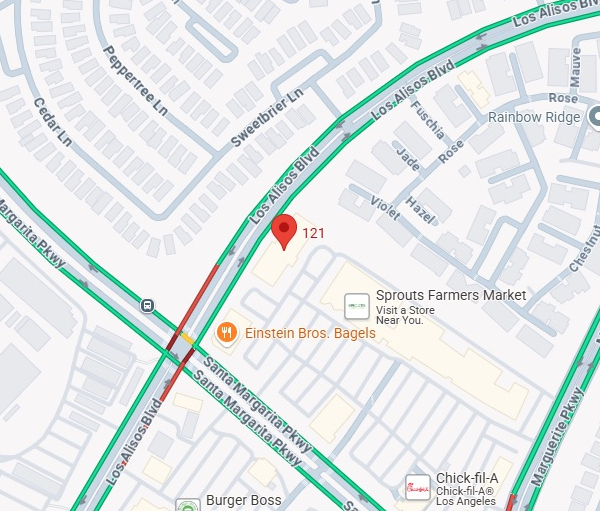
- Mission Viejo: 27725 Santa Margarita Parkway, Suite 121, Mission Viejo, CA 92691 — (949) 309-0990
- Long Beach: 100 Oceangate, Long Beach, CA 90802 — (562) 496-1997
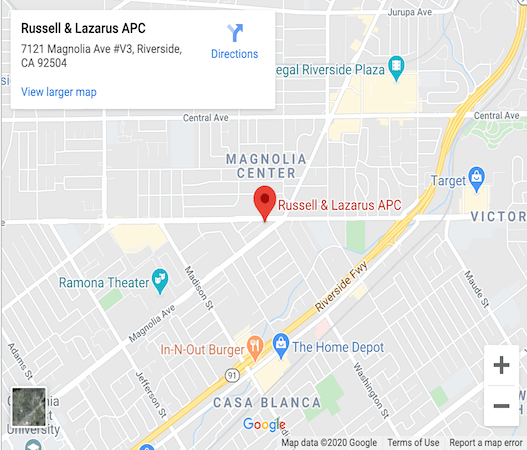
- Riverside: 7121 Magnolia Ave., #V3, Riverside, CA 92504 — (951) 485-4000
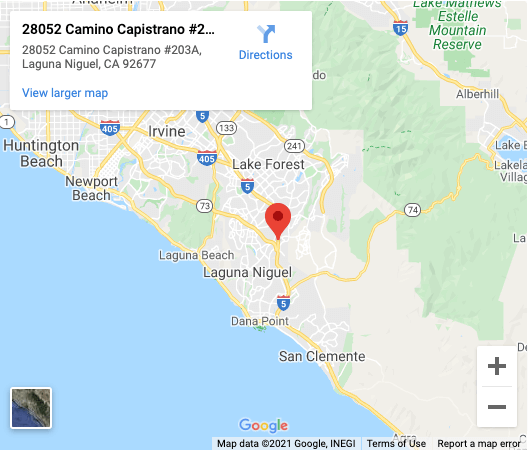
- Laguna Niguel: 28052 Camino Capistrano, Suite 203A, Laguna Niguel, CA 92677 — (949) 426-7299
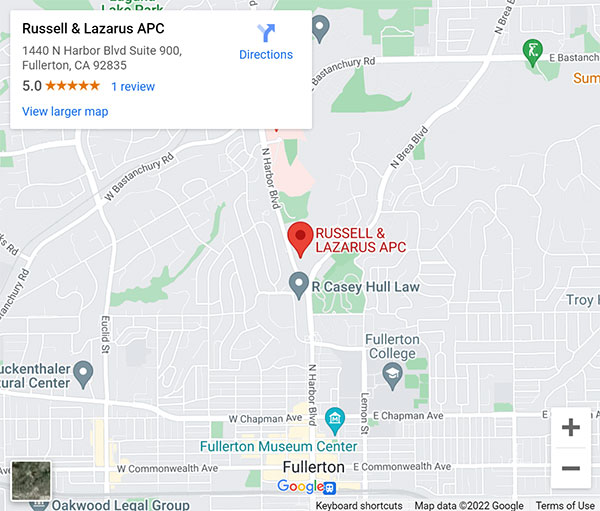
- Fullerton: 1440 N. Harbor Blvd., Suite 900, Fullerton, CA 92835 — (714) 772-9700
- Sacramento: 930 G Street, Ste. 103, Sacramento, CA 95814 — (916) 299-3999
- San Diego: 600 West Broadway, Suite 700, San Diego, CA 92101 — (619) 986-0411
Contact a California Bicycle Accident Lawyer
A bicycle accident can involve serious injuries, disputed liability, multiple insurance policies, disappearing video evidence, California bicycle laws, government roadway claims, future medical treatment, and substantial financial losses.
Russell & Lazarus APC represents injured cyclists throughout California from offices in Newport Beach, Mission Viejo, Long Beach, Riverside, Laguna Niguel, Fullerton, Sacramento, and San Diego.
If you were hit by a car, truck, rideshare vehicle, commercial vehicle, or other motorist while riding a bicycle, contact Russell & Lazarus for a complimentary case evaluation or call toll-free at (877) 789-4878.
FAQs
1. What should I do after being hit by a car while riding a bicycle in California?
Seek medical attention, call law enforcement when appropriate, obtain the driver’s insurance and contact information, photograph the bicycle, vehicle, roadway, bicycle lane, and visible injuries, identify witnesses, and preserve your bicycle, helmet, clothing, GPS data, and other evidence. Serious bicycle accidents should be investigated before important video or electronic evidence disappears.
2. Do bicyclists have the same rights as drivers in California?
California Vehicle Code Section 21200 generally provides bicyclists using highways with the rights and responsibilities applicable to drivers of vehicles, except for provisions that cannot reasonably apply to bicycles. This means cyclists are legitimate roadway users but must also comply with applicable traffic laws.
3. How much space must a California driver give a bicyclist when passing?
California’s Three Feet for Safety Act generally requires at least three feet between a passing motor vehicle and the bicycle or rider. When another lane traveling in the same direction is available, the law also generally requires the motorist to change lanes before passing when doing so is practicable, safe, and legally permitted.
4. Can a driver be responsible for opening a car door into a bicyclist?
Potentially. California Vehicle Code Section 22517 prohibits opening a vehicle door into moving traffic unless it can be done reasonably safely and without interfering with traffic. A cyclist injured in a dooring accident may have a claim against the person who opened the door depending on the circumstances.
5. Can I recover compensation if I was partly responsible for my bicycle accident?
Potentially. California follows comparative fault principles. A cyclist who shares part of the responsibility may still be able to recover compensation, although the amount can be reduced according to the percentage of fault assigned to the cyclist.
6. Can I recover damages if the driver who hit my bicycle fled the scene?
Potentially. Police investigation, surveillance footage, witnesses, dashboard cameras, license plate information, and vehicle debris may help identify a hit-and-run driver. Depending on the policy and circumstances, uninsured motorist coverage may also be relevant when an insured person is injured while cycling.
7. What compensation can a California bicycle accident victim recover?
Depending on the facts, damages may include medical expenses, future medical treatment, lost wages, reduced earning capacity, bicycle and equipment damage, physical pain, emotional distress, scarring, disfigurement, and permanent disability. The value of a claim depends on the specific injuries, liability evidence, insurance coverage, and long-term consequences.
8. How long do I have to file a bicycle accident lawsuit in California?
California Code of Civil Procedure Section 335.1 generally provides two years for many personal injury claims caused by another person’s wrongful act or negligence. Different deadlines may apply in particular cases. A bicycle accident involving a dangerous public road, bicycle lane, or other public-entity issue may require government claim presentation within approximately six months.
9. Does Russell & Lazarus handle bicycle accidents throughout Orange County?
Yes. Russell & Lazarus serves cyclists throughout Orange County from offices in Newport Beach, Mission Viejo, Laguna Niguel, and Fullerton. The firm serves communities including Irvine, Costa Mesa, Huntington Beach, Anaheim, Santa Ana, Lake Forest, Dana Point, San Clemente, Laguna Beach, Brea, Yorba Linda, and surrounding Orange County cities.
10. Does Russell & Lazarus handle San Diego bicycle accident cases?
Yes. The Russell & Lazarus San Diego office serves bicycle accident victims throughout San Diego County, including San Diego, Carlsbad, Chula Vista, Coronado, Del Mar, El Cajon, Encinitas, Escondido, Imperial Beach, La Mesa, Lemon Grove, National City, Oceanside, Poway, San Marcos, Santee, Solana Beach, and Vista.
11. Where can I find a bicycle accident lawyer near me in California?
Russell & Lazarus has California offices in Newport Beach, Mission Viejo, Long Beach, Riverside, Laguna Niguel, Fullerton, Sacramento, and San Diego. These locations allow the firm to represent injured cyclists throughout Orange County, Los Angeles County, Riverside and the Inland Empire, Sacramento and Northern California, San Diego County, and surrounding communities.
12. Why hire a lawyer who handles bicycle accident cases?
Bicycle cases can involve specialized California traffic laws, bicycle-lane rules, the Three Feet for Safety Act, dooring accidents, comparative fault, serious head and orthopedic injuries, uninsured motorist coverage, roadway defects, digital cycling data, and accident reconstruction. An experienced personal injury attorney can investigate these issues, preserve evidence, identify responsible parties, document damages, communicate with insurers, and prepare the case for litigation when necessary.



Locations
Phone: (949) 851-0222
Toll-Free: (877) 789-4878
South Tower, 3501 Jamboree Rd #600,
Newport Beach, CA 92660
Phone: (951) 485-4000
Toll-Free: (877) 789-4878
Grandville Executive Suites
7121 Magnolia Ave., #V3
Riverside, CA 92504
Phone: (949) 426-7299
Toll-Free: (877) 789-4878
28052 Camino Capistrano, Suite 203A
Laguna Niguel, CA 92677
Phone: (949) 309-0990
Toll-Free: (877) 789-4878
27725 Santa Margarita Parkway, Suite 121 Mission Viejo, CA 92691