Personal Injury Finance FAQs

A serious accident can create financial pressure long before a personal injury claim is resolved. In addition to medical expenses, an injured person may face lost income, transportation costs, vehicle repairs, insurance deductibles, prescription expenses, and ordinary household bills that continue during recovery.

Understanding how health insurance, auto medical payments coverage, medical liens, settlement funding, and debt collection may affect a California personal injury case can help you avoid costly financial decisions. The Orange County personal injury attorneys at Russell & Lazarus APC assist injured people with the legal and financial issues that can arise during a personal injury claim.
Our Newport Beach office serves clients throughout Orange County, including Anaheim, Costa Mesa, Fullerton, Huntington Beach, Irvine, Laguna Niguel, Mission Viejo, Newport Beach, Orange, Santa Ana, Tustin, and nearby communities. The following answers address common questions about paying medical bills and managing accident-related expenses while a claim is pending.
Common Personal Injury Finance Questions
- Should I use settlement advance funding?
- Should I use my health insurance after an accident?
- Can insurance provide medical payments coverage after an auto accident?
- Should I negotiate my medical bills myself?
- How can I reduce the risk of medical bills being sent to collections?
- What expenses may be claimed as personal injury damages?

Should I Use Settlement Advance Funding?
Pre-settlement funding, sometimes called a lawsuit advance, litigation funding, or settlement advance funding, provides money to an injured claimant before the personal injury case is resolved. The funding company is generally repaid from the settlement or judgment according to the terms of the agreement.
Some agreements are described as nonrecourse because repayment may not be required if the claimant receives no recovery. However, the exact terms vary, and the total payoff can increase substantially while the claim remains pending. Fees may be calculated monthly, compounded, assessed in stages, or subject to minimum repayment amounts.
Before accepting settlement funding, review the written agreement carefully and determine:
- How much money you will actually receive;
- How the funding charges are calculated;
- Whether fees are simple or compounded;
- How often the repayment amount increases;
- Whether the total repayment amount is capped;
- Whether administrative, processing, or application fees apply;
- What happens if the settlement is smaller than expected;
- Whether the agreement gives the funding company a priority interest in the recovery; and
- Whether there is a cancellation period.

A settlement advance may provide temporary relief when an injury prevents someone from working or paying essential expenses. However, accepting an advance can reduce the amount the claimant ultimately receives from the settlement. It is generally prudent to consider less expensive alternatives before signing a funding agreement.
Possible alternatives may include negotiating temporary payment arrangements with creditors, requesting medical-provider payment plans, applying for hospital financial assistance, reviewing disability benefits, using available insurance benefits, or borrowing from a lower-cost source.
Your personal injury attorney cannot guarantee when a case will settle or how much compensation you will receive. However, your attorney can review how a proposed funding agreement may affect the distribution of your potential recovery.
Should I Use My Health Insurance After an Accident?
In many cases, an injured person should ask medical providers to bill available health insurance. Health insurance may provide access to negotiated rates and can prevent medical bills from remaining entirely unpaid while a personal injury claim is pending.
However, the best approach depends on the insurance plan, the medical provider, the treatment required, and the circumstances of the claim. Some providers may be outside the patient’s network, some treatment may not be covered, and some providers may offer treatment under a medical lien instead of billing insurance.
Before choosing how treatment will be paid, consider:
- Whether the provider participates in your health plan;
- Whether the treatment requires prior authorization;
- Whether deductibles, copayments, or coinsurance apply;
- Whether the health plan may seek reimbursement from a future settlement;
- Whether Medicare, Medi-Cal, or another government program paid accident-related expenses;
- Whether the provider is asking you to sign a medical lien; and
- Whether another insurance benefit, such as auto MedPay, is available.
Using health insurance does not necessarily mean the insurer will have no interest in the personal injury recovery. A health insurer, Medicare, Medi-Cal, or another benefit provider may assert reimbursement or subrogation rights for accident-related treatment it paid. These claims should be identified and addressed before settlement funds are distributed.
Do not assume that refusing to use health insurance will automatically increase the value of your personal injury claim. Treatment decisions should be based on medical needs and a clear understanding of the payment arrangement, not on promises that a particular billing method will guarantee a larger settlement.
What Is a Medical Lien in a Personal Injury Case?
A medical lien is an agreement or legal claim that may allow a healthcare provider or benefit plan to seek payment from a personal injury settlement or judgment. A provider may agree to treat an injured person without immediate payment in exchange for receiving payment from the eventual recovery.
Medical lien treatment can help someone obtain care when health insurance is unavailable, treatment is denied, or the necessary provider does not accept the patient’s insurance. However, lien-based charges may differ from negotiated health-insurance rates, and payment may still be required under the lien agreement even when the settlement is smaller than expected.
Before signing a medical lien, ask:
- What services will be provided;
- How the provider’s charges will be calculated;
- Whether you remain personally responsible if the case is unsuccessful;
- Whether the provider will bill available health insurance;
- Whether the provider may sell or assign the lien;
- Whether interest or additional fees can be added; and
- Whether the balance may be negotiated when the case concludes.
Keep copies of every lien agreement and provide them to your attorney. Medical liens and health-plan reimbursement claims can directly affect the amount of settlement funds available to the injured person.
Can Insurance Provide Medical Payments Coverage After an Auto Accident?
Medical Payments Coverage, commonly called MedPay, is optional coverage that may be included in an automobile insurance policy. Subject to the policy’s terms and limits, auto MedPay can pay certain medical expenses for covered people injured in a vehicle accident without requiring a determination of who caused the collision.
MedPay may potentially help with expenses such as:
- Ambulance transportation;
- Emergency room care;
- Hospital treatment;
- Doctor visits;
- Diagnostic testing;
- Physical therapy;
- Copayments and deductibles; and
- Other covered accident-related medical expenses.
Coverage limits and exclusions vary by policy. Review the declarations page and policy language to determine whether MedPay was purchased, who qualifies as an insured person, which expenses are covered, and how quickly a claim must be submitted.
A homeowner’s or renter’s insurance policy should not be assumed to cover the policyholder’s medical treatment after an automobile collision. Homeowner’s medical payments coverage is commonly designed for certain injuries to other people occurring on the insured property or arising from covered premises-related incidents. Vehicle-related medical expenses are more commonly addressed through an automobile policy, health insurance, or another applicable benefit.
Because insurance provisions differ, provide your attorney with complete copies of all potentially relevant policies rather than relying only on an insurance identification card or declarations page.
Will Using MedPay Reduce My Personal Injury Settlement?
Using MedPay does not automatically determine the value of the claim against the negligent party. However, the insurance carrier may have contractual or legal reimbursement rights, and the same medical expense generally should not be paid twice without addressing those rights.
Your attorney can review the policy, document the MedPay benefits issued, identify any reimbursement demand, and account for those payments when calculating the proposed settlement distribution.
Should I Negotiate My Medical Bills Myself?
Before negotiating a medical bill, first determine whether the bill is accurate and whether it should have been processed through health insurance, auto MedPay, Medicare, Medi-Cal, or another available benefit.
Request and review:
- An itemized statement;
- Insurance explanations of benefits;
- Applicable contractual adjustments;
- Records of payments already made;
- Any written denial of coverage;
- The provider’s financial-assistance policy;
- Payment-plan options; and
- Copies of any lien or payment agreement.
Medical bills can contain duplicate entries, coding errors, incorrect insurance information, or charges that should have been adjusted under a provider contract. A billing dispute should be addressed before negotiating a reduced balance.
When a valid balance remains, the provider may offer a payment plan, financial-hardship reduction, prompt-payment discount, or negotiated lump-sum resolution. There is no universal percentage that every provider will accept, and a patient should not rely on a fixed formula when making an offer.
If you are represented by an attorney, discuss the bill before entering into a new payment agreement or signing additional documents. Your attorney may be able to communicate with the provider, coordinate the bill with other insurance benefits, or negotiate a lien when the personal injury claim is resolved. A reduction is not guaranteed.
How Can I Reduce the Risk of Medical Bills Being Sent to Collections?
A pending personal injury claim does not automatically suspend medical bills. Medical providers generally do not have to wait for the liability claim to settle unless they have agreed to a payment arrangement, lien, or temporary hold.
To reduce the risk of collection activity:
- Open and review every medical bill and insurance notice;
- Confirm that the provider has the correct insurance information;
- Request an itemized statement when charges are unclear;
- Dispute billing errors promptly and in writing;
- Ask whether financial assistance is available;
- Request a reasonable payment plan when necessary;
- Keep written confirmation of any billing hold or payment agreement;
- Inform your attorney about unpaid balances and collection notices; and
- Keep copies of letters, emails, account statements, and payment receipts.
An attorney may be able to ask a provider to delay collection activity, enter into a lien arrangement, or communicate with the provider about the pending claim. However, an attorney’s letter does not automatically erase a valid debt, freeze the account, prevent a collection lawsuit, or prohibit lawful credit reporting.
Debt collectors must comply with federal and California laws that restrict abusive, deceptive, and unfair collection conduct. A debt collector cannot lawfully threaten actions it cannot take, misrepresent the amount or legal status of a debt, or harass a consumer.
If you receive a collection notice, do not ignore it. Review the creditor’s name, account information, amount claimed, and instructions for disputing the debt. Notify your attorney immediately if the bill is related to the injuries involved in your personal injury case.
Can Medical Debt Affect My Credit?
Some medical collection accounts may appear on consumer credit reports depending on the amount, age, status of the account, and current credit-reporting policies. Credit-reporting rules and industry practices can change, so consumers should review their reports rather than assume that medical debt cannot affect credit.
You may obtain your credit reports and dispute inaccurate information. Paying a provider or collection company does not correct an inaccurate account unless the account is also properly updated with the credit-reporting agencies.
If a medical bill contains an error, relates to treatment that should have been covered, or includes charges prohibited by applicable billing laws, preserve the supporting documents and dispute the account in writing.
What Expenses May Be Claimed as Damages in a Personal Injury Case?
California personal injury damages are intended to compensate an injured person for legally recoverable losses caused by another party’s wrongful conduct. The claimant must generally establish that the expense or loss was caused by the accident and was reasonable, necessary, and supported by evidence.
Potential economic damages may include:
- Past medical expenses;
- Reasonably anticipated future medical expenses;
- Ambulance and emergency treatment;
- Hospital and surgical expenses;
- Physical and occupational rehabilitation;
- Prescription medication;
- Medical equipment and supplies;
- Transportation to medically necessary appointments;
- Past lost earnings;
- Loss of future earning capacity;
- Vehicle and other property damage;
- Reasonable replacement-service expenses;
- Home or vehicle modifications required because of a disability; and
- Other documented out-of-pocket losses caused by the injury.
Non-economic damages may include compensation for pain, suffering, inconvenience, emotional distress, physical impairment, disfigurement, and loss of enjoyment of life. The damages available depend on the type of case, the evidence, and any legal limitations that apply.
How Should I Document Accident-Related Expenses?
Keep an organized record of every expense and financial loss associated with the injury. Useful documentation may include:
- Medical bills and itemized statements;
- Insurance explanations of benefits;
- Prescription receipts;
- Receipts for braces, crutches, wound-care products, and other medical supplies;
- Mileage logs for medical appointments;
- Rideshare, taxi, parking, and public transportation receipts;
- Pay stubs and wage statements;
- Employer letters confirming missed work;
- Tax returns or business records when self-employment income is affected;
- Repair estimates and property-damage photographs;
- Receipts for necessary household or caregiving assistance; and
- A written record of how the injuries affect daily activities.
Do not assume that an expense will be recoverable merely because it was incurred after the accident. The expense should be connected to the injury, reasonably necessary, and supported by appropriate records.
Can I Claim Mileage and Transportation Expenses?
Reasonable transportation expenses associated with necessary medical treatment may be considered as part of a personal injury claim. Examples can include mileage, parking, tolls, rideshare fares, taxi fares, or public transportation used to attend medical appointments.
Keep a transportation log showing:
- The date of each trip;
- The medical provider visited;
- The purpose of the appointment;
- The starting point and destination;
- The number of miles traveled; and
- Parking, toll, or fare expenses.
Unusually expensive or unnecessary transportation may be disputed. The amount claimed should be reasonable in relation to the medical need and available transportation options.
Can I Claim Lost Wages if I Miss Work?
An injured person may be able to claim income lost because accident-related injuries prevented them from working. Documentation can include physician restrictions, employer verification, attendance records, pay stubs, commission statements, tax returns, and other evidence establishing the amount of income lost.
Self-employed individuals may need business records, invoices, contracts, appointment calendars, profit-and-loss statements, or expert analysis to establish lost income or diminished earning capacity.
Time away from work should be medically and factually connected to the injury. An insurance company may dispute lost earnings that are unsupported by medical restrictions or reliable financial records.
What Happens to Medical Bills When a Personal Injury Case Settles?
Before settlement funds are distributed, the attorney generally identifies outstanding medical liens, insurance reimbursement claims, litigation expenses, attorney fees, and other authorized deductions. The remaining net amount is then calculated for the client.
Potential claims against settlement funds may include:
- Medical-provider liens;
- Hospital liens;
- Health-insurance reimbursement claims;
- Medicare or Medi-Cal recovery claims;
- Auto MedPay reimbursement claims;
- Workers’ compensation liens;
- Settlement funding agreements; and
- Other valid contractual or statutory claims.
Resolving these obligations before final distribution can help protect the injured person from later repayment demands. Ask your attorney to explain each proposed deduction and provide a written settlement statement.
Frequently Asked Questions
1. Should I use my health insurance for accident-related medical treatment?
Available health insurance can often help pay accident-related medical expenses at negotiated rates, but the best approach depends on the provider, policy, treatment, and potential reimbursement rights. Discuss the billing arrangement with your medical provider, insurer, and personal injury attorney before agreeing to treatment on a lien.
2. Is pre-settlement funding the same as a traditional loan?
Not always. Some settlement-funding agreements are structured as nonrecourse advances that are repaid only from a recovery, while others may have different terms. Regardless of the label, review the total payoff calculation, fees, repayment priority, and consequences before accepting the funds.
3. Can my attorney guarantee that settlement funding will be repaid?
No attorney can guarantee the outcome or value of a personal injury claim. The funding agreement should explain what happens if there is no recovery or if the recovery is insufficient to pay the full requested amount.
4. Does California auto insurance automatically include MedPay?
No. Medical Payments Coverage is generally optional. Review your auto policy declarations and coverage terms to determine whether MedPay was purchased, the applicable limit, and who is covered.
5. Can a medical provider send my bill to collections while my case is pending?
Yes, unless the provider has agreed to a payment plan, lien, billing hold, or another arrangement. A pending liability claim does not automatically stop billing or collection activity.
6. Can my personal injury lawyer stop all collection calls?
An attorney may communicate with providers and debt collectors and may request that communications be directed appropriately. However, legal representation does not automatically cancel a valid debt or prevent every lawful collection action.
7. What should I do if a medical bill is incorrect?
Request an itemized statement, compare it with your medical records and insurance explanation of benefits, and dispute inaccurate charges promptly in writing. Keep copies of the bill, dispute, supporting records, and all responses.
8. Will Medicare or Medi-Cal need to be repaid from my settlement?
Medicare, Medi-Cal, and certain other benefit programs may seek reimbursement for accident-related treatment paid on the injured person’s behalf. These claims should be identified, verified, and resolved before settlement proceeds are distributed.
9. How much of my settlement will I receive after medical bills are paid?
The net amount depends on the settlement, attorney fees, litigation costs, medical liens, insurance reimbursement claims, funding agreements, and other authorized deductions. Your attorney should provide a written settlement statement explaining the proposed distribution.
10. Where can I get help with personal injury financial questions in Orange County?
Russell & Lazarus APC assists injured people with personal injury claims and related financial issues from its Newport Beach office. Contact Russell & Lazarus APC or call (949) 851-0222 to discuss your accident, medical bills, insurance coverage, and available legal options with an Orange County personal injury attorney.
Speak With an Orange County Personal Injury Lawyer
Medical bills, insurance claims, liens, debt collection, and lost income can make an already difficult recovery more stressful. Addressing these issues early can help prevent billing errors, preserve documentation, identify available insurance benefits, and clarify how financial obligations may affect a future settlement.
If you were injured because of another party’s negligence in Newport Beach or elsewhere in Orange County, contact Russell & Lazarus APC’s Newport Beach office at (949) 851-0222 to discuss your personal injury claim and related financial concerns.
This information is provided for general informational purposes only and does not constitute legal, medical, insurance, credit, or financial advice; coverage, reimbursement rights, recoverable damages, and available legal options depend on the specific facts and documents involved.



Locations
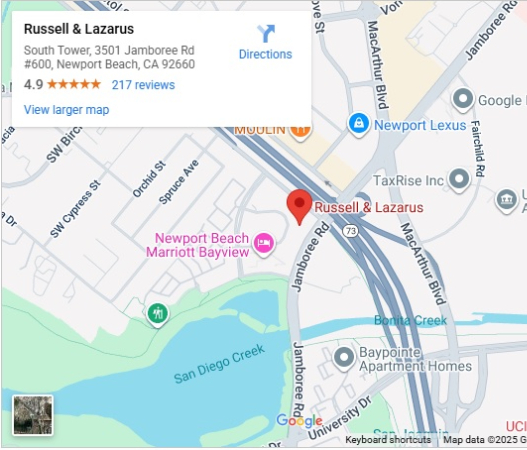
Phone: (949) 851-0222
Toll-Free: (877) 789-4878
South Tower, 3501 Jamboree Rd #600,
Newport Beach, CA 92660
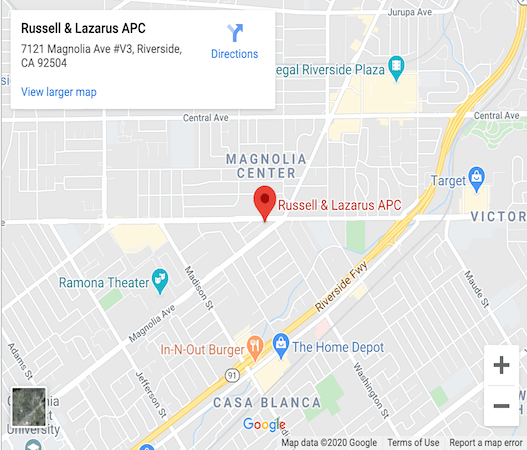
Phone: (951) 485-4000
Toll-Free: (877) 789-4878
Grandville Executive Suites
7121 Magnolia Ave., #V3
Riverside, CA 92504
Phone: (949) 426-7299
Toll-Free: (877) 789-4878
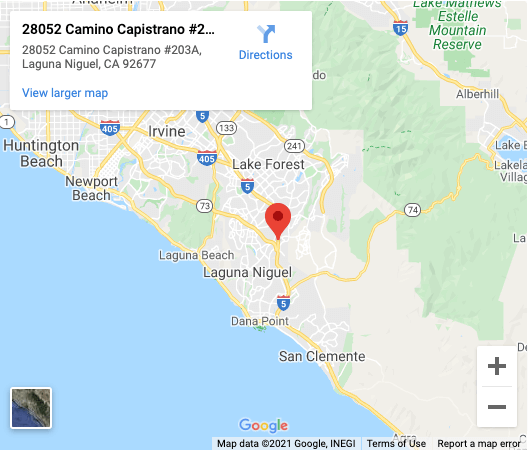
28052 Camino Capistrano, Suite 203A
Laguna Niguel, CA 92677
Phone: (949) 309-0990
Toll-Free: (877) 789-4878
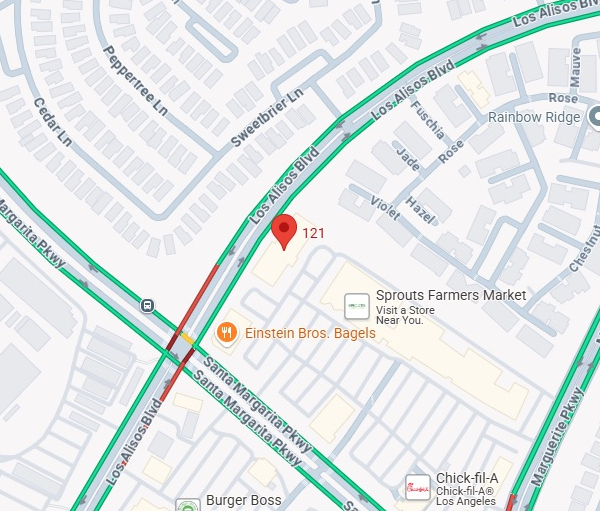
27725 Santa Margarita Parkway, Suite 121 Mission Viejo, CA 92691