Pedestrian Accidents

Pedestrian accidents can result in devastating injuries because people walking have virtually no protection from the force of a moving car, truck, motorcycle, or other vehicle. A pedestrian may suffer broken bones, traumatic brain injuries, spinal injuries, internal injuries, permanent disabilities, or other serious harm even in a collision that occurs at relatively low speed.

If you or someone you love was injured while walking in Orange County, understanding your rights can be an important part of your recovery. The Orange County pedestrian accident lawyers at Russell & Lazarus APC represent people injured by negligent drivers and other responsible parties throughout Newport Beach and communities across Orange County.
Pedestrian collisions can occur at marked and unmarked crosswalks, intersections, parking lots, driveways, residential neighborhoods, shopping districts, and major Orange County roadways. In Newport Beach, accidents may occur along Pacific Coast Highway, Newport Boulevard, Jamboree Road, MacArthur Boulevard, Bristol Street, and other heavily traveled streets. Our attorneys investigate how the collision occurred, identify potentially responsible parties, document damages, and pursue the compensation available under California law.
What Should I Do After a Pedestrian Accident in Orange County?
Your first priority after a pedestrian accident should be obtaining appropriate medical care. Call 911 when emergency assistance is needed and report the collision to law enforcement. Even if you initially believe your injuries are minor, some conditions may become more apparent after the shock and adrenaline of the accident subside.
If you are physically able and it is safe to do so, steps that may help preserve evidence include:

- Taking photographs and video of the accident scene;
- Photographing the vehicle that struck you and any visible damage;
- Documenting your injuries;
- Obtaining the driver’s name, license, insurance, and contact information;
- Getting names and contact information from witnesses;
- Photographing traffic signals, crosswalks, signs, road markings, and lighting conditions;
- Identifying nearby businesses or homes that may have surveillance cameras;
- Keeping damaged clothing, shoes, personal belongings, or other physical evidence;
- Saving medical bills and records related to your injuries; and
- Writing down what you remember about the collision as soon as reasonably possible.
Evidence can disappear quickly after a pedestrian accident. Surveillance recordings may be overwritten, vehicles may be repaired, and witnesses may become harder to locate. Beginning an investigation early can therefore be important.
Who Has the Right-of-Way in a California Crosswalk?

California Vehicle Code Section 21950 generally requires drivers to yield the right-of-way to pedestrians crossing within marked crosswalks and unmarked crosswalks at intersections. Drivers approaching pedestrians within a crosswalk must also exercise due care and take appropriate action to protect pedestrian safety.
Pedestrians also have responsibilities. California law requires pedestrians to use reasonable care for their own safety and prohibits a pedestrian from suddenly leaving a curb or other place of safety and entering the path of a vehicle that is so close as to create an immediate hazard.
Determining fault therefore requires examining the entire collision rather than assuming that either the pedestrian or driver was automatically responsible.
Can I File a Claim if I Was Hit Outside a Crosswalk?
Potentially, yes. Being outside a marked crosswalk does not automatically prevent a pedestrian from pursuing compensation after an accident.
California law generally requires pedestrians crossing somewhere other than a marked crosswalk or an unmarked crosswalk at an intersection to yield to vehicles that are sufficiently close to constitute an immediate hazard. At the same time, drivers continue to have a duty to exercise reasonable care for the safety of pedestrians in the roadway.
A claim involving a pedestrian outside a crosswalk may require careful examination of the driver’s speed, visibility, lighting, traffic conditions, braking, distractions, roadway design, and the pedestrian’s actions before the collision.
What if the Pedestrian Accident Was Partly My Fault?
California follows a pure comparative negligence system. This means that a pedestrian may potentially recover compensation even when the pedestrian shares some responsibility for the accident. However, the compensation may be reduced according to the pedestrian’s percentage of fault.
For example, if an injured pedestrian has $100,000 in legally recoverable damages and is determined to be 25 percent responsible for the accident, the recovery could generally be reduced by 25 percent to $75,000.
Insurance companies may argue that a pedestrian was distracted, crossed outside a crosswalk, entered the roadway unexpectedly, ignored a traffic signal, or otherwise contributed to the accident. These arguments should be evaluated against evidence such as witness statements, video footage, physical evidence, traffic signals, vehicle damage, and accident reconstruction information.
What Causes Pedestrian Accidents in Orange County?
Pedestrian accidents frequently occur because a motorist fails to see a pedestrian or fails to react safely when approaching a crosswalk, intersection, driveway, or other area where pedestrians are present.
Common causes of Orange County pedestrian accidents can include:
- Distracted driving;
- Texting or mobile phone use;
- Speeding;
- Failure to yield at a crosswalk;
- Unsafe right or left turns;
- Running red lights or stop signs;
- Driving under the influence of alcohol or drugs;
- Backing out of parking spaces or driveways without looking;
- Failure to check for pedestrians before turning;
- Driving too fast for traffic, visibility, or weather conditions;
- Fatigued or drowsy driving;
- Unsafe rideshare or delivery-driver maneuvers; and
- Other negligent driving behavior.
What Injuries Are Common in Pedestrian Accidents?
Unlike occupants of motor vehicles, pedestrians do not have seat belts, airbags, vehicle frames, or other protective structures surrounding them. A pedestrian can be injured by the initial impact with a vehicle and then suffer additional trauma after being thrown onto the roadway, another vehicle, or another object.
Pedestrian accident injuries may include:
- Traumatic brain injuries;
- Concussions;
- Skull fractures;
- Spinal cord injuries;
- Neck and back injuries;
- Broken arms and legs;
- Hip and pelvic fractures;
- Knee and ankle injuries;
- Internal organ injuries;
- Internal bleeding;
- Facial and dental injuries;
- Nerve damage;
- Lacerations and road rash;
- Amputations;
- Permanent disabilities; and
- Other catastrophic injuries.
Some pedestrian accident victims require surgery, hospitalization, physical rehabilitation, assistive devices, home modifications, or long-term medical care.
Who Can Be Held Responsible for a Pedestrian Accident?
The driver who struck the pedestrian is often the first party investigated, but other individuals, businesses, or entities may potentially share responsibility depending on how the collision occurred.
Potentially responsible parties may include:
- A negligent driver;
- The owner of the vehicle;
- An employer whose employee caused the collision while acting within the scope of employment;
- A commercial trucking or delivery company;
- A rideshare driver or other transportation provider;
- A manufacturer of a defective vehicle or vehicle component;
- A property owner in certain circumstances; or
- A governmental entity when a dangerous public property condition contributed to the accident and the legal requirements for such a claim are satisfied.
Identifying every potentially responsible party can be particularly important when a pedestrian suffers catastrophic injuries requiring substantial future medical treatment.
What Compensation Can I Recover After a Pedestrian Accident?
If another person’s negligence caused the collision, an injured pedestrian may be entitled to pursue compensation for economic and non-economic damages resulting from the accident.
Potential damages may include:
- Emergency medical treatment;
- Ambulance expenses;
- Hospital bills;
- Surgical expenses;
- Doctor and specialist care;
- Physical and occupational rehabilitation;
- Prescription medications;
- Future medical treatment;
- Past lost wages;
- Loss of future earning capacity;
- Damage to personal property;
- Pain and suffering;
- Emotional distress;
- Loss of enjoyment of life;
- Permanent disability; and
- Other legally recoverable losses.
The value of a pedestrian accident claim depends on the severity of the injuries, anticipated future treatment, lost income, degree of permanent impairment, available insurance coverage, evidence establishing liability, and other circumstances specific to the case.
Can a Family File a Claim After a Fatal Pedestrian Accident?
When a pedestrian dies because of injuries caused by another party’s wrongful conduct, qualifying surviving family members may be able to pursue a California wrongful death claim. Depending on the circumstances, a related survival action may also be available.
Wrongful death cases have specific California rules governing who may bring a claim and which damages may be recovered. Families dealing with a fatal pedestrian collision should consider obtaining legal advice regarding the deadlines and claims that may apply.
How Long Do I Have to File a Pedestrian Accident Claim in California?
Many California personal injury lawsuits must generally be filed within two years from the date of the injury. However, this is a general rule and exceptions can affect the applicable deadline.
A significantly shorter deadline can apply when a governmental entity may be responsible. For example, an injury claim against a California government entity generally must first be presented through the government claim process within six months of the incident, subject to exceptions and additional procedural requirements.
Other circumstances can also affect a filing deadline. Because missing the applicable deadline may prevent recovery, injured pedestrians should not rely on a general limitations period without having the specific circumstances evaluated.
What if a Dangerous Road or Intersection Contributed to the Accident?
Some pedestrian accidents involve questions about road design, traffic signals, crosswalk placement, visibility, lighting, signage, construction, or another condition of public property.
Claims involving a city, county, state agency, or another governmental entity are subject to special California procedures and shorter deadlines. Establishing government liability also requires satisfying specific legal requirements. An attorney can investigate whether a roadway condition contributed to the accident and determine whether a government claim should be considered.
Should I Talk to the Driver’s Insurance Company?
The driver’s insurance company may contact you shortly after the accident and ask for a recorded statement, medical authorization, or detailed information regarding your injuries.
Insurance adjusters may also ask questions about where you were walking, whether you were inside a crosswalk, what the traffic signal displayed, whether you were using a mobile phone, and whether you saw the vehicle before impact.
Before providing a detailed recorded statement or signing broad medical authorizations for another party’s insurer, consider speaking with an Orange County pedestrian accident attorney about your rights and the potential effect of those documents on your claim.
Should I Accept an Early Insurance Settlement?
An insurer may make an early settlement offer before the full extent of the pedestrian’s injuries and future medical needs are understood. Serious orthopedic, neurological, spinal, and traumatic brain injuries can require extensive treatment and may affect a person’s future earning capacity.
Before accepting a settlement and signing a release, it is important to evaluate current medical expenses, anticipated future care, lost income, permanent limitations, pain and suffering, and other damages associated with the accident.
What Information Should I Give My Pedestrian Accident Lawyer?
Provide your attorney with any information or evidence you have relating to the collision and your injuries. Do not be concerned if some records are unavailable because an attorney can often obtain additional evidence during the investigation.
Useful information may include:
- Police or accident reports;
- Driver and insurance information;
- Photographs and videos;
- Witness names and contact information;
- Medical records and bills;
- Health insurance information;
- Employment and wage-loss records;
- Correspondence from insurance companies;
- Receipts for accident-related expenses;
- Damaged clothing or personal items; and
- Notes describing the accident and how your injuries have affected your daily life.
Why Hire an Orange County Pedestrian Accident Lawyer?
A serious pedestrian accident claim can involve disputed fault, severe injuries, multiple insurance policies, commercial defendants, surveillance evidence, accident reconstruction, or claims against governmental entities.
An Orange County pedestrian accident lawyer can investigate the collision, preserve evidence, identify responsible parties, obtain available video footage, interview witnesses, communicate with insurance companies, collect medical documentation, calculate damages, consult appropriate experts when necessary, negotiate a settlement, and pursue litigation when appropriate.
Russell & Lazarus APC represents injured pedestrians throughout Orange County, including Newport Beach, Anaheim, Anaheim Hills, Brea, Buena Park, Costa Mesa, Cypress, Dana Point, Fountain Valley, Fullerton, Garden Grove, Huntington Beach, Irvine, Laguna Beach, Laguna Hills, Laguna Niguel, Lake Forest, Mission Viejo, Orange, Rancho Santa Margarita, San Clemente, San Juan Capistrano, Santa Ana, Seal Beach, Tustin, Westminster, Yorba Linda, and surrounding communities.
FAQs
1. What should I do immediately after being hit by a car in Orange County?
Seek medical attention and call law enforcement when appropriate. If you are physically able, photograph the scene, obtain the driver’s insurance information, gather witness contact information, and identify nearby surveillance cameras. Keep records of medical treatment and other accident-related expenses. Consider speaking with an Orange County pedestrian accident lawyer before providing a detailed statement to the other driver’s insurance company.
2. Do pedestrians always have the right-of-way in California?
No. Drivers generally must yield to pedestrians within marked crosswalks and unmarked crosswalks at intersections, but pedestrians also have a duty to use reasonable care for their safety. Liability depends on the circumstances surrounding the collision, including traffic signals, vehicle movements, pedestrian conduct, visibility, and other evidence.
3. Can I recover compensation if I was hit outside a crosswalk?
Potentially. Crossing outside a marked or unmarked crosswalk does not automatically eliminate a pedestrian injury claim. California law requires pedestrians in certain circumstances to yield to approaching traffic, but drivers still have a duty to exercise reasonable care for pedestrians. Comparative fault may determine how responsibility is divided.
4. What if I was partially responsible for my pedestrian accident?
California uses pure comparative negligence. An injured pedestrian may potentially recover damages even when partially responsible for the accident, although the recovery can be reduced according to the pedestrian’s percentage of fault.
5. What are the most common injuries in Orange County pedestrian accidents?
Pedestrian accidents can cause traumatic brain injuries, spinal cord injuries, broken bones, pelvic fractures, internal injuries, nerve damage, facial injuries, road rash, amputations, and other catastrophic injuries. The severity depends on factors including vehicle speed, point of impact, and how the pedestrian lands after the collision.
6. How much is an Orange County pedestrian accident case worth?
There is no standard settlement value. A claim may be affected by the severity of the injuries, medical expenses, future medical needs, lost wages, diminished earning capacity, permanent disability, pain and suffering, available insurance coverage, and the evidence establishing each party’s responsibility.
7. How long do I have to file a pedestrian accident lawsuit in California?
Many California personal injury lawsuits generally have a two-year statute of limitations. However, important exceptions apply. Claims involving government entities may require an administrative claim to be submitted within six months. Other circumstances can also change the applicable deadline, so the specific case should be reviewed promptly.
8. Can I make a claim if I was hit by an uninsured or underinsured driver?
Potentially. Depending on the circumstances and available policies, uninsured or underinsured motorist coverage may provide another potential source of compensation. An attorney can review applicable automobile insurance policies and determine whether such coverage may be available.
9. Can I file a claim if a dangerous intersection contributed to my pedestrian accident?
Possibly. If inadequate traffic controls, dangerous road design, poor visibility, defective signals, or another condition of public property contributed to the collision, a claim involving a governmental entity may need to be investigated. These cases involve special legal requirements and potentially much shorter deadlines.
10. Where can I find an Orange County pedestrian accident lawyer in Newport Beach?
Russell & Lazarus APC represents pedestrian accident victims throughout Orange County from its Newport Beach office. If you or a loved one was struck by a vehicle, contact Russell & Lazarus APC’s Newport Beach office at (949) 851-0222 to discuss the accident and your potential legal options.
Speak With an Orange County Pedestrian Accident Lawyer
Evidence following a pedestrian collision can disappear quickly. Surveillance video may be overwritten, vehicles can be repaired, roadway conditions may change, and witnesses can become difficult to locate. Beginning an investigation early can help preserve evidence needed to determine how the collision happened and who may be responsible.
If you or a family member was injured in a pedestrian accident in Newport Beach or elsewhere in Orange County, contact Russell & Lazarus APC’s Newport Beach office at (949) 851-0222 to discuss your circumstances with an experienced Orange County pedestrian accident attorney.
This information is provided for general informational purposes only and does not constitute legal or medical advice; filing deadlines, liability, damages, insurance coverage, and available legal options depend on the specific facts and circumstances of each case.



Locations
Phone: (949) 851-0222
Toll-Free: (877) 789-4878
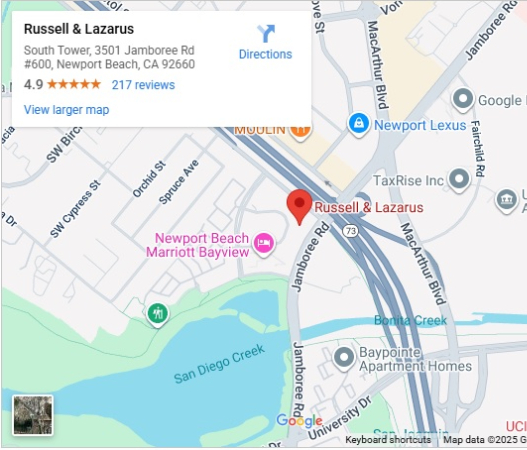
South Tower, 3501 Jamboree Rd #600,
Newport Beach, CA 92660
Phone: (951) 485-4000
Toll-Free: (877) 789-4878
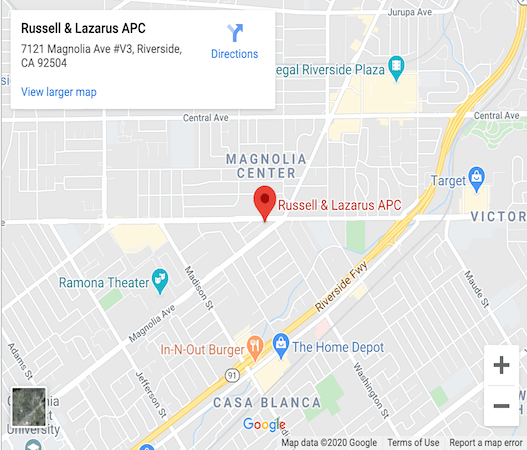
Grandville Executive Suites
7121 Magnolia Ave., #V3
Riverside, CA 92504
Phone: (949) 426-7299
Toll-Free: (877) 789-4878
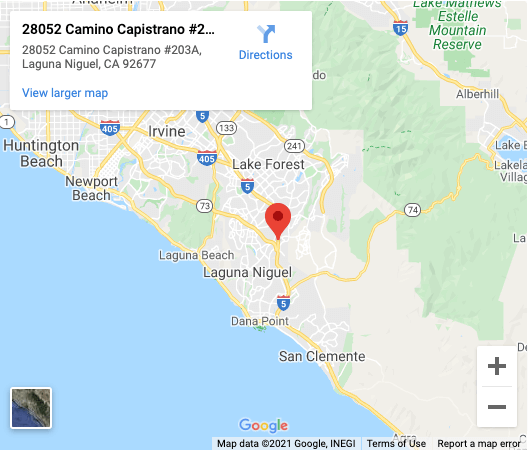
28052 Camino Capistrano, Suite 203A
Laguna Niguel, CA 92677
Phone: (949) 309-0990
Toll-Free: (877) 789-4878
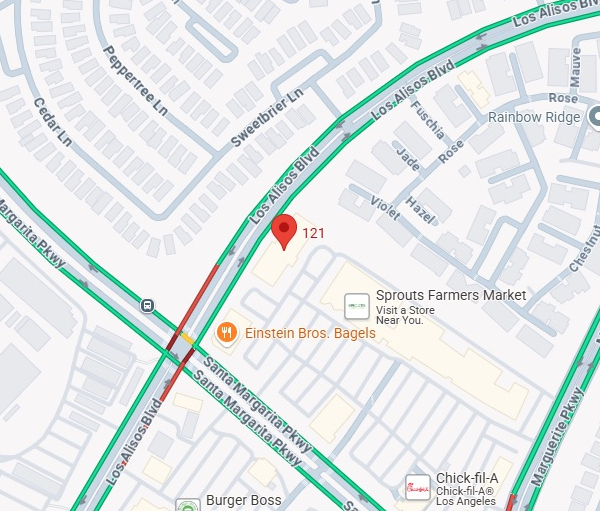
27725 Santa Margarita Parkway, Suite 121 Mission Viejo, CA 92691