Slip /Trip & Fall Accidents (Pt.1)

A slip, trip, or fall can result in serious injuries that affect a person’s mobility, ability to work, independence, and quality of life. These accidents frequently occur in grocery stores, restaurants, shopping centers, hotels, apartment buildings, parking structures, private homes, workplaces, and on public sidewalks throughout Orange County.

If you were injured because of a dangerous property condition, you may have questions about who is responsible, what evidence you need, how California premises liability law applies, and whether you can recover compensation. The Orange County slip and fall lawyers at Russell & Lazarus APC represent people injured on residential, commercial, and public property throughout Newport Beach and communities across Orange County.
Our attorneys have compiled answers to common questions about California slip and fall claims. Review the resources below or contact our Newport Beach office to discuss the circumstances of your accident with an experienced Orange County premises liability attorney.
Common Orange County Slip and Fall Questions
- How do I know whether I should file an Orange County slip and fall claim?
- What should I do if my child was injured in a fall at a friend’s Newport Beach home?
- Can I seek compensation after falling on a dangerous Orange County sidewalk?
- How can I prove a store knew or should have known about a dangerous condition?
- How can an Orange County injury lawyer help after a slip and fall accident?
- Can I pursue a California premises liability claim if I was trespassing?
- What should I do immediately after a California slip and fall accident?
- Can I seek compensation if I was injured by a falling tree or branch in California?
- What must I prove to establish a California slip and fall case?
- Can I still file a slip and fall claim if I did not photograph the accident scene?

What Is a Slip and Fall Claim?
A slip and fall claim is a type of premises liability case. It may arise when a person is injured because an owner, tenant, business operator, property manager, maintenance company, or another party failed to use reasonable care in managing property under its ownership or control.
The fact that someone fell on another person’s property does not automatically establish negligence. An injured person generally must present evidence showing that a dangerous condition existed, the responsible party created it or knew or reasonably should have known about it, the party failed to take reasonable corrective action, and the condition caused the injuries.
Every premises liability claim is fact-specific. The investigation may examine who owned, occupied, maintained, inspected, repaired, or controlled the area where the accident occurred.
Does a Store Have to Pay My Medical Bills Because I Fell There?
Not necessarily. A store is not automatically responsible simply because a customer fell and was injured on the premises. Liability depends on whether negligence contributed to the accident.
A store, business, or property operator may potentially be responsible when:

- An employee created the dangerous condition;
- The business actually knew about the condition but failed to correct it or provide an adequate warning;
- The condition existed long enough that a reasonable inspection should have discovered it;
- The business failed to follow reasonable inspection or maintenance procedures;
- The design or condition of the property created an unreasonable risk of injury; or
- Another negligent act or omission contributed to the fall.
For example, a grocery store claim may depend on how a spill occurred, how long it remained on the floor, whether employees inspected the aisle, whether warning signs were placed, and whether surveillance footage shows what happened before the fall.
What Does Actual or Constructive Notice Mean?
Notice is often an important issue in an Orange County slip and fall case. Actual notice means the responsible party knew about the dangerous condition. Constructive notice means the condition may have existed long enough that a reasonably careful owner or operator should have discovered and corrected it.
Evidence of actual notice may include:
- Previous customer complaints;
- Employee reports;
- Maintenance requests;
- Work orders;
- Prior accidents involving the same condition;
- Emails or internal communications; and
- Statements acknowledging awareness of the hazard.
Evidence of constructive notice may include:
- The appearance and condition of a spill;
- Footprints, cart tracks, dirt, or debris in a liquid;
- Surveillance footage showing how long the hazard existed;
- Missing or incomplete inspection records;
- A recurring leak or maintenance problem;
- Evidence that employees regularly passed through the area; and
- Failure to conduct inspections within a reasonable period.
A property owner or business may also be responsible without a separate notice analysis when its employees affirmatively created the dangerous condition.
Who May Be Responsible for a Slip and Fall Accident?
Property ownership alone does not always determine responsibility. Liability may depend on which individual or company possessed or controlled the area and had the authority to inspect, repair, maintain, or warn about the condition.
Potentially responsible parties may include:
- The property owner;
- A commercial tenant;
- A residential landlord;
- A property management company;
- A store, restaurant, hotel, or other business operator;
- A maintenance or janitorial contractor;
- A security company;
- A landscaping contractor;
- A construction contractor or subcontractor;
- A homeowner;
- A homeowners association; or
- A governmental entity responsible for public property.
More than one party may share responsibility. Lease agreements, maintenance contracts, inspection records, work orders, and property-management documents can help determine which parties controlled the dangerous area.
What Are Common Causes of Orange County Slip and Fall Accidents?
Slip, trip, and fall accidents can result from temporary hazards, structural defects, inadequate maintenance, or unsafe property-management practices.
Common dangerous conditions include:
- Wet or slippery floors;
- Food, drinks, oil, soap, or other spilled substances;
- Recently cleaned floors without adequate warning signs;
- Rainwater tracked into a building entrance;
- Uneven flooring or pavement;
- Cracked or raised sidewalks;
- Loose rugs, mats, or carpeting;
- Torn or buckled carpet;
- Broken or uneven stairs;
- Missing or unstable handrails;
- Poor lighting;
- Unmarked changes in floor elevation;
- Merchandise or electrical cords in walkways;
- Potholes and parking-lot defects;
- Defective escalators or elevators;
- Unsecured construction areas;
- Falling merchandise;
- Falling trees or branches;
- Swimming pool hazards; and
- Other unsafe residential, commercial, or public property conditions.
Where Do Slip and Fall Accidents Occur in Orange County?
Fall accidents can occur anywhere people live, work, shop, dine, travel, or receive services. Common locations include:
- Grocery stores and supermarkets;
- Retail stores and shopping centers;
- Restaurants, bars, and coffee shops;
- Hotels and resorts;
- Apartment and condominium complexes;
- Office buildings;
- Hospitals and medical facilities;
- Parking lots and parking structures;
- Schools and universities;
- Gyms and recreational facilities;
- Private homes;
- Construction sites;
- Sidewalks, parks, and government buildings; and
- Marinas, waterfront businesses, and public walkways.
Russell & Lazarus APC represents injured people throughout Orange County, including Newport Beach, Anaheim, Costa Mesa, Fullerton, Huntington Beach, Irvine, Laguna Beach, Laguna Hills, Laguna Niguel, Mission Viejo, Orange, Santa Ana, Tustin, and surrounding communities.
What Should I Do After an Orange County Slip and Fall?
Your health should be the first priority. Seek medical attention when necessary, particularly if you struck your head, lost consciousness, cannot place weight on an injured limb, or experience significant pain, dizziness, confusion, numbness, or weakness.
When possible, take the following steps:
- Report the accident to the property owner, manager, or employee;
- Ask that a written incident report be prepared;
- Request a copy or photograph of the report;
- Photograph and record video of the dangerous condition;
- Photograph the surrounding area from multiple angles;
- Document the absence or placement of warning signs;
- Obtain names and contact information from witnesses;
- Identify nearby surveillance cameras;
- Keep the shoes and clothing worn during the accident;
- Preserve receipts or other records showing why you were on the property;
- Follow your healthcare provider’s treatment instructions; and
- Keep medical bills, wage-loss records, and accident-related receipts.
Be accurate when describing what happened, but avoid guessing about facts you do not know. Do not sign a release or provide a detailed recorded statement to the property owner’s insurance carrier before understanding your injuries and legal rights.
What if I Did Not Take Pictures of the Dangerous Condition?
You may still have a claim. Many people do not photograph the accident scene because they are injured, embarrassed, disoriented, or focused on obtaining medical help.
Other evidence may help establish what happened, including:
- Surveillance footage;
- Witness statements;
- Incident reports;
- Employee testimony;
- Inspection and cleaning records;
- Maintenance requests and repair records;
- Photographs taken by another person;
- Prior complaints or similar accidents;
- Emergency response records; and
- Medical records describing how the injury occurred.
Surveillance video is often overwritten automatically. An attorney can send a preservation request asking the business or property operator to retain relevant video, reports, inspection documents, and other evidence.
Can I File a Claim After Falling on an Orange County Sidewalk?
Possibly. Responsibility for a dangerous sidewalk may depend on where the fall occurred, who owned or controlled the property, whether a neighboring property owner contributed to the defect, and whether a city or another public entity was responsible for the area.
Potential sidewalk hazards can include:
- Raised or uneven concrete;
- Cracks and broken pavement;
- Tree-root damage;
- Missing utility covers;
- Construction defects;
- Poor lighting;
- Water accumulation; and
- Obstructions in the pedestrian path.
Claims involving a city, county, school district, transportation agency, or another California public entity are subject to special procedures. A personal-injury claim against a public entity generally must be presented within six months of accrual under California Government Code Section 911.2, subject to exceptions and additional requirements.
Because the public-entity deadline is substantially shorter than the general personal-injury limitation period, a sidewalk or public-property accident should be investigated promptly.
What if I Fell at a Friend’s or Relative’s Home?
A person injured at a friend’s, relative’s, or neighbor’s home may be uncomfortable pursuing a claim. However, a homeowners or renters insurance policy may provide liability or medical-payments coverage, depending on the policy and circumstances.
A claim does not necessarily require a personal dispute with the homeowner. The insurance carrier typically investigates the accident, evaluates coverage, and handles the claim under the terms of the policy.
Potential residential hazards may include:
- Broken stairs;
- Loose handrails;
- Slippery pool areas;
- Uneven walkways;
- Inadequate lighting;
- Loose rugs;
- Unsecured electrical cords;
- Dangerous balconies or decks; and
- Other conditions the homeowner knew or reasonably should have addressed.
Can a Landlord Be Responsible for a Tenant’s or Visitor’s Fall?
A landlord may potentially be responsible when a dangerous condition is located in an area under the landlord’s control or when the landlord knew or reasonably should have known about a condition the landlord had a duty and opportunity to repair.
Examples may include unsafe common-area stairs, broken exterior lighting, defective railings, damaged walkways, or hazards reported to property management but left uncorrected.
Responsibility may depend on the lease, maintenance obligations, prior complaints, repair history, control of the area, and whether a tenant or another party created the condition.
Can I Recover Compensation if I Was Trespassing?
Trespassing can substantially affect a premises liability claim, but it does not create one automatic rule for every case. California courts evaluate property-related duties by examining the circumstances, foreseeability of harm, conduct of the parties, and other legal factors.
The analysis may differ when the injured person is a child, when the property owner knew people frequently entered the area, or when the injury resulted from willful or highly dangerous conduct. Recreational-use laws and other statutory limitations may also apply in certain cases.
An attorney should evaluate the specific reason the person entered the property, the owner’s knowledge, the nature of the condition, and the circumstances surrounding the injury.
What if I Was Partially Responsible for My Fall?
California follows a pure comparative negligence system. Being partially responsible for a slip and fall does not necessarily prevent an injured person from recovering compensation. Instead, the recoverable damages may be reduced according to the percentage of fault assigned to the injured person.
For example, if a person’s legally recoverable damages total $100,000 and that person is found 30 percent responsible, the recovery may be reduced to $70,000.
An insurance company may argue that the injured person:
- Was distracted by a mobile phone;
- Ignored an adequate warning sign;
- Was running or acting carelessly;
- Wore unsafe footwear;
- Entered a restricted area;
- Was impaired by alcohol or drugs; or
- Should have noticed and avoided an obvious condition.
These allegations should be evaluated against the complete evidence. A visible hazard does not necessarily relieve a property owner or operator of every responsibility, and the conduct of both parties may be considered.
What Injuries Can Result From a Slip and Fall?
A fall can cause far more than temporary soreness. The type and severity of the injuries may depend on the surface, height of the fall, direction of impact, age and health of the injured person, and whether the person struck stairs, shelving, pavement, or another object.
Common injuries may include:
- Traumatic brain injuries;
- Concussions;
- Neck and back injuries;
- Spinal cord injuries;
- Herniated discs;
- Broken wrists and arms;
- Hip and pelvic fractures;
- Knee and ankle injuries;
- Shoulder injuries;
- Torn ligaments and tendons;
- Nerve damage;
- Facial and dental injuries;
- Lacerations;
- Chronic pain; and
- Permanent mobility limitations.
Older adults can face particularly serious consequences from hip fractures and head injuries. Children may suffer growth-plate injuries, broken bones, head trauma, and emotional distress following a fall.
What Compensation May Be Available After a Slip and Fall?
If another party’s negligence caused the accident, an injured person may be able to pursue compensation for economic and non-economic losses.
Potential damages may include:
- Emergency medical treatment;
- Ambulance and hospital expenses;
- Surgical expenses;
- Doctor and specialist care;
- Physical and occupational therapy;
- Prescription medications;
- Medical equipment;
- Future medical care;
- Past lost wages;
- Loss of future earning capacity;
- Out-of-pocket expenses;
- Pain and suffering;
- Emotional distress;
- Loss of enjoyment of life;
- Disfigurement;
- Permanent disability; and
- Other legally recoverable losses.
There is no standard settlement amount for an Orange County slip and fall case. The potential value depends on the severity of the injuries, medical evidence, future treatment, lost income, liability evidence, comparative fault, insurance coverage, and other case-specific circumstances.
How Long Do I Have to File a California Slip and Fall Lawsuit?
Under California Code of Civil Procedure Section 335.1, many personal-injury lawsuits based on another party’s wrongful act or negligence generally must be filed within two years.
However, exceptions can change the applicable deadline. Claims involving public entities may require a claim within six months. Claims involving minors, delayed discovery, certain medical issues, contractual provisions, or other circumstances may follow different rules.
Waiting can also make the case more difficult even when the legal deadline has not expired. Video can be erased, records can be discarded, the property can be repaired, and witnesses may forget what they observed.
Why Hire an Orange County Slip and Fall Lawyer?
Premises liability cases frequently involve disputed fault, missing video footage, incomplete inspection records, multiple responsible parties, expert analysis, and insurance-company arguments that the condition was obvious or existed for too little time to be discovered.
An Orange County slip and fall attorney can:
- Investigate the accident scene;
- Identify the owner and parties controlling the property;
- Send evidence-preservation notices;
- Request surveillance footage and incident reports;
- Obtain inspection, cleaning, and maintenance records;
- Interview witnesses;
- Research prior complaints and similar accidents;
- Review leases and service contracts;
- Document medical treatment and financial losses;
- Communicate with insurance carriers;
- Consult qualified experts when appropriate;
- Negotiate a potential settlement; and
- Pursue litigation when necessary.
Frequently Asked Questions
1. How do I know whether I have an Orange County slip and fall case?
A potential claim may exist when a dangerous property condition caused your injuries and an owner, business, occupier, manager, maintenance company, or another responsible party created the condition or knew or reasonably should have known about it. Whether the party had sufficient time and ability to repair the condition or warn visitors is often important.
2. What must I prove in a California premises liability claim?
A claimant generally must establish that the defendant owned, occupied, leased, or controlled the property; failed to use reasonable care; and caused the claimant’s injuries and resulting damages. The required evidence depends on the type of property and dangerous condition involved.
3. Can I file a claim if I did not take pictures after my fall?
Yes. Photographs are useful but are not the only evidence. Surveillance video, witness statements, incident reports, inspection logs, maintenance records, prior complaints, employee testimony, and medical documentation may help establish the claim.
4. How can I prove a grocery store knew about a spill?
Evidence may show that an employee created or saw the spill, a customer previously reported it, or the substance remained on the floor long enough that a reasonable inspection should have discovered it. Video footage, inspection records, witness statements, footprints, cart tracks, and the appearance of the spill may be relevant.
5. Can I sue after falling on a Newport Beach or Orange County sidewalk?
Possibly. Responsibility may rest with a city, another public entity, an adjacent property owner, a contractor, or another party, depending on who controlled the area and caused or knew about the dangerous condition. Public-entity claims involve special requirements and much shorter deadlines.
6. What if I fell at a friend’s house?
You may still have a claim when an unsafe condition caused the injury. A homeowners or renters insurance policy may provide coverage, subject to its terms and exclusions. Pursuing insurance benefits does not necessarily mean the matter will become a personal dispute with your friend.
7. Can I recover compensation if I was partly responsible?
Potentially. California’s pure comparative-fault rule allows damages to be divided according to each party’s responsibility. Your recovery may be reduced by the percentage of fault attributed to you rather than automatically eliminated.
8. How long must a dangerous condition exist before a business is responsible?
There is no fixed number of minutes that applies to every case. The analysis may consider the type of hazard, location, customer traffic, inspection practices, employee activity, foreseeability, and how long a reasonable business would need to discover and address the condition.
9. How much is an Orange County slip and fall claim worth?
The potential value depends on the severity and permanence of the injuries, medical expenses, future treatment, lost income, pain and suffering, available insurance, strength of the liability evidence, and whether the injured person shares responsibility. Each case requires an individual evaluation.
10. Where can I find an Orange County slip and fall lawyer in Newport Beach?
Russell & Lazarus APC represents slip and fall victims throughout Orange County from its Newport Beach office. To discuss a potential claim, contact Russell & Lazarus APC or call (949) 851-0222.
Speak With an Orange County Slip and Fall Lawyer
Evidence in a premises liability case can disappear quickly. A business may erase surveillance footage, repair the dangerous condition, discard inspection records, or lose contact with employees and witnesses. Beginning an investigation promptly can help preserve evidence needed to determine why the fall occurred and who may be responsible.
If you or a family member was injured in a slip, trip, or fall in Newport Beach or elsewhere in Orange County, contact Russell & Lazarus APC’s Newport Beach office at (949) 851-0222 to discuss the accident and your legal options with an experienced Orange County slip and fall attorney.
This information is provided for general informational purposes only and does not constitute legal or medical advice; filing deadlines, liability, damages, insurance coverage, and available legal options depend on the specific facts and circumstances of each case.



Locations
Phone: (949) 851-0222
Toll-Free: (877) 789-4878
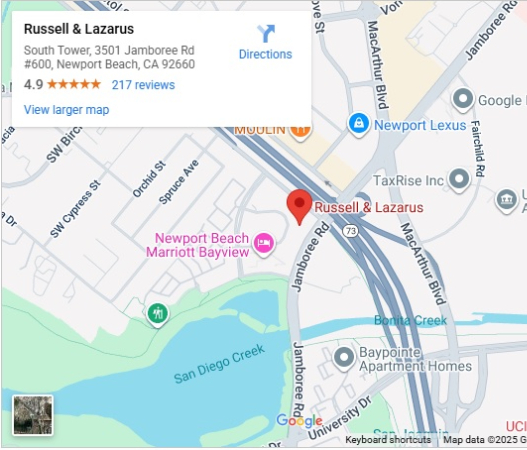
South Tower, 3501 Jamboree Rd #600,
Newport Beach, CA 92660
Phone: (951) 485-4000
Toll-Free: (877) 789-4878
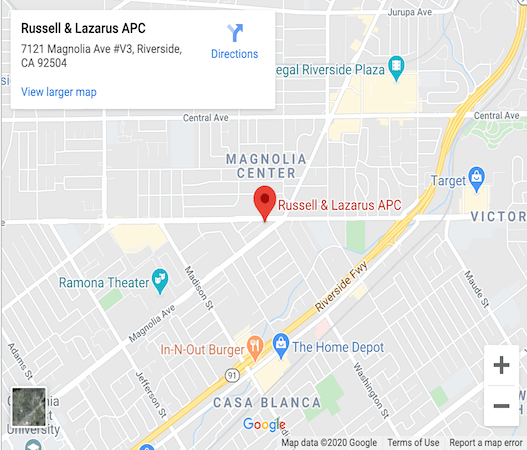
Grandville Executive Suites
7121 Magnolia Ave., #V3
Riverside, CA 92504
Phone: (949) 426-7299
Toll-Free: (877) 789-4878
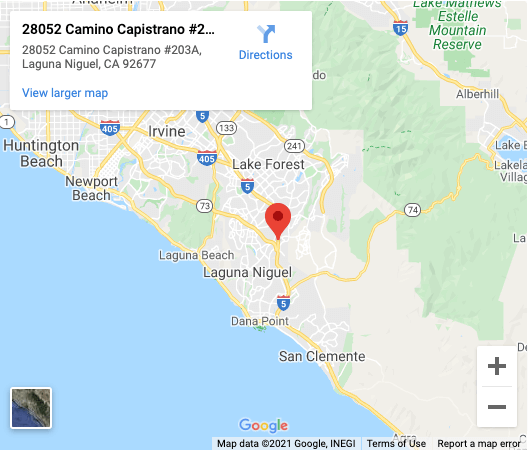
28052 Camino Capistrano, Suite 203A
Laguna Niguel, CA 92677
Phone: (949) 309-0990
Toll-Free: (877) 789-4878
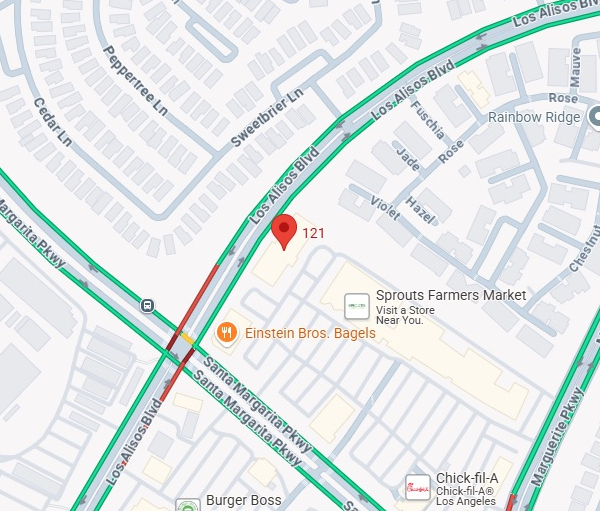
27725 Santa Margarita Parkway, Suite 121 Mission Viejo, CA 92691