Slip /Trip & Fall Accidents (Pt. 2)
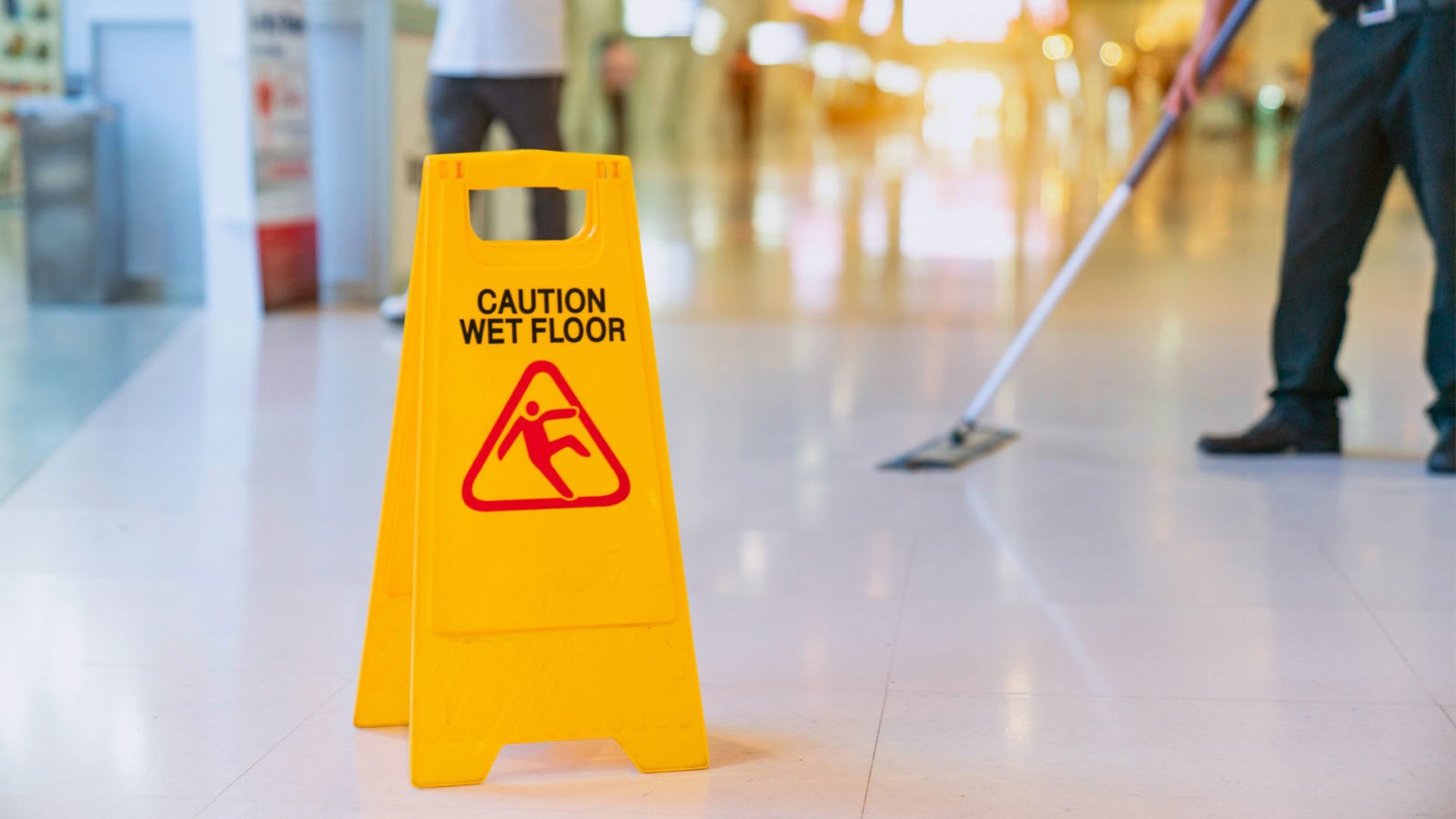
Slip and fall cases can involve complicated questions about property ownership, control, maintenance responsibilities, building-code compliance, public sidewalks, and whether a business had enough time to discover a dangerous condition. Identifying who may be responsible often requires more than determining where the fall occurred.

The Newport Beach slip and fall attorneys at Russell & Lazarus APC help injured people evaluate premises liability claims involving commercial businesses, apartment complexes, private homes, public sidewalks, construction areas, hotels, restaurants, retail stores, and other properties throughout Orange County.
A serious fall can cause broken bones, traumatic brain injuries, spinal injuries, torn ligaments, nerve damage, and permanent mobility limitations. The financial consequences may include medical expenses, lost earnings, rehabilitation costs, and the need for future care. Below are answers to frequently asked questions involving some of the more complicated aspects of California slip and fall claims.
Can a City Be Liable for a Dangerous Sidewalk in Newport Beach?
A city or another public entity may potentially be responsible when a dangerous condition of public property causes an injury. However, proving a claim against a governmental entity requires more than showing that the sidewalk was cracked, raised, uneven, or otherwise defective.
Under California Government Code Section 835, an injured person generally must establish that:
- The public property was in a dangerous condition at the time of the accident;
- The dangerous condition caused the injury;
- The condition created a reasonably foreseeable risk of the type of injury that occurred; and
- A public employee negligently created the condition, or the public entity had actual or constructive notice of it with sufficient time to take protective measures.
Public sidewalk cases may involve raised concrete, tree-root damage, broken pavement, missing utility covers, inadequate lighting, water accumulation, unsafe construction areas, or other conditions affecting pedestrian travel.
Responsibility is not always limited to the city. Depending on the location and cause of the defect, the investigation may also examine an adjacent property owner, homeowners association, utility company, construction contractor, maintenance provider, or another entity.
How Quickly Must I File a Claim Against a City or Public Entity?
Claims involving a California city, county, school district, transportation authority, or another public entity are subject to special procedures. A claim involving personal injury generally must be presented to the appropriate public entity within six months after the claim accrues, subject to limited exceptions.
Presenting a government claim is not the same as filing a lawsuit. It is an administrative step that generally must be completed before a lawsuit against the public entity may proceed.
A government claim should identify information such as:
- The injured person’s identity and contact information;
- The date and location of the accident;
- The circumstances surrounding the injury;
- The public employees involved, when known;
- The nature of the injuries and damages; and
- The amount claimed when required.

Submitting a claim to the wrong entity or missing required information can create additional legal issues. Because the government-claim deadline is much shorter than the general personal injury deadline, an accident involving a sidewalk, park, public building, roadway, school, pier, or other public property should be evaluated promptly.
What Does It Mean When a Property Owner Should Have Known About a Hazard?
A property owner or business may be responsible when it had actual knowledge of a dangerous condition or when the condition existed long enough that a reasonably careful owner or operator should have discovered it. The second concept is commonly called constructive notice.
There is no universal rule establishing exactly how many minutes a spill, obstruction, or other hazard must exist before a business is considered to have constructive notice. The answer depends on the circumstances, including:
- The type of dangerous condition;
- Where it was located;
- The amount of customer or pedestrian traffic;
- How visible the hazard was;
- The business’s inspection procedures;
- When the area was last inspected;
- Whether employees regularly passed through the area;
- Whether similar hazards occurred previously; and
- How difficult it would have been to discover and correct the condition.
For example, a grocery store may be expected to conduct reasonable inspections of areas where spills frequently occur. A hotel may need to monitor entrances, pool areas, stairways, and common spaces. A restaurant may need procedures for identifying food, beverages, grease, or water on walking surfaces.
What Evidence Can Establish Constructive Notice?
Constructive notice is often established through circumstantial evidence rather than an admission from the property owner. Relevant evidence may include:
- Surveillance video showing when the hazard appeared;
- Inspection and cleaning records;
- Employee schedules and assigned responsibilities;
- Witness statements;
- Photographs of the dangerous condition;
- Dirt, footprints, shopping-cart tracks, or debris within a spill;
- Prior complaints about the same area;
- Previous accidents involving a similar condition;
- Maintenance requests and work orders;
- Evidence of a recurring leak or defect; and
- Testimony showing that employees regularly walked past the condition.
If an employee or contractor created the hazard, it may not be necessary to prove how long the condition existed before the accident. Examples can include an employee leaving merchandise in an aisle, a cleaning crew creating a slippery surface, or a maintenance worker leaving equipment in a pedestrian walkway.
Are Newport Beach Property Owners Responsible for Rainwater and Wet Floors?
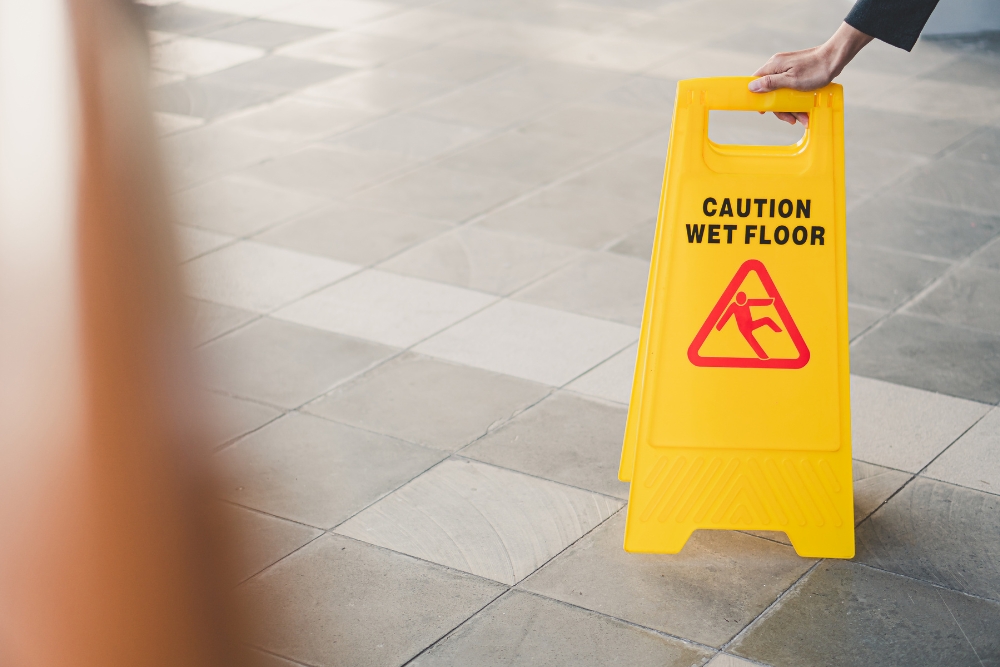
Rainwater and wet walking surfaces are more relevant to Newport Beach premises liability claims than snow and ice. Rain can create slippery entrances, tiled walkways, outdoor stairs, parking structures, hotel lobbies, restaurant patios, marina walkways, and shopping-center common areas.
A property owner is not automatically liable whenever someone falls on a wet surface. The analysis may consider whether the condition created an unreasonable risk, whether the owner had notice, and whether reasonable precautions were taken.
Reasonable precautions may include:
- Placing absorbent mats near entrances;
- Using appropriate warning signs;
- Inspecting and drying wet areas;
- Repairing leaks or drainage problems;
- Using slip-resistant walking surfaces;
- Maintaining gutters and drainage systems;
- Providing adequate lighting; and
- Restricting access when an area cannot be used safely.
A business that undertakes to remove water or correct a wet condition must use reasonable care while doing so. Poorly placed mats, curled mat edges, ineffective warnings, or incomplete cleanup efforts can create additional hazards.
Can a Building-Code Violation Strengthen a Slip and Fall Claim?
A building-code violation can be important evidence in a California premises liability case, particularly when the violation directly relates to the way the accident occurred.
Potentially relevant violations may involve:
- Missing or defective handrails;
- Improper stair dimensions;
- Uneven riser heights;
- Insufficient stairway lighting;
- Unsafe ramps;
- Missing guardrails;
- Noncompliant walking surfaces;
- Improper changes in elevation;
- Unsafe balcony or deck construction; and
- Inadequate accessibility features.
Under California Evidence Code Section 669, violating a statute, ordinance, or regulation may create a rebuttable presumption that the defendant failed to use due care when specific legal requirements are satisfied. Among other things, the violation must have caused the injury, the rule must have been intended to prevent the type of occurrence involved, and the injured person must belong to the class the rule was designed to protect.
A building-code violation does not automatically prove the entire case. The injured person must still connect the violation to the accident and resulting damages. The defendant may also attempt to rebut the presumption or argue that a different code applied when the property was constructed.
How Can a Building-Code Violation Be Proven?
Evidence of a building-code violation may come from:
- Measurements and photographs taken at the accident scene;
- Building permits and inspection records;
- Architectural plans;
- Code-enforcement notices;
- Prior repair requests;
- Maintenance records;
- Testimony from contractors or property employees;
- Applicable state and local building standards; and
- An inspection by a qualified premises safety, engineering, or construction expert.
The property should be inspected before the condition is repaired or altered whenever possible. If immediate inspection is not possible, photographs, surveillance footage, measurements taken by witnesses, and official records may still help document the condition.
Can an Employee File a Premises Liability Claim After a Workplace Fall?
An employee injured while performing job duties may be entitled to California workers’ compensation benefits. These benefits can provide medical care and partial wage replacement without requiring the employee to prove that the employer was negligent.
Workers’ compensation may be the employee’s primary remedy against the employer. However, a separate third-party personal injury claim may potentially exist when someone other than the employer caused or contributed to the accident.
Potential third parties may include:
- The owner of property not owned by the employer;
- A commercial landlord;
- A property management company;
- A maintenance or janitorial contractor;
- A construction contractor or subcontractor;
- An equipment manufacturer;
- A delivery company; or
- Another business operating at the location.
For example, an employee working in a leased commercial building may have a workers’ compensation claim and a potential third-party claim against the building owner or maintenance company if an unsafe stairway, defective railing, or another dangerous condition caused the fall.
These claims require careful coordination because a workers’ compensation insurer may assert reimbursement or lien rights against a third-party recovery.
Does a Prior Warning to an Employee Prove the Property Owner Was Negligent?
Evidence that an owner, manager, or supervisor previously warned someone about a dangerous condition may help establish actual knowledge. However, the meaning of the warning depends on the circumstances.
Important questions may include:
- Who provided the warning;
- What specific danger was identified;
- When the warning was given;
- Whether the danger was temporary or permanent;
- Whether the area was restricted;
- Whether corrective action was promised or attempted;
- Whether the injured person had to encounter the condition to perform assigned work; and
- Whether an adequate alternative route was available.
A warning may help prove that the responsible party knew about the condition, but the defense may argue that the warning was adequate and that the injured person failed to avoid the danger. California’s comparative-fault rules may require the conduct of all involved parties to be evaluated.
Can More Than One Defendant Be Responsible for a Slip and Fall?
Yes. Commercial and residential properties are often owned, occupied, managed, cleaned, repaired, and secured by different people or companies. Several parties may share responsibility when their conduct contributes to a dangerous condition.
Potential defendants may include:
- The property owner;
- A commercial tenant;
- A residential landlord;
- A property manager;
- A homeowners association;
- A maintenance company;
- A janitorial service;
- A landscaping company;
- A security provider;
- A general contractor;
- A subcontractor;
- A product manufacturer;
- A neighboring property owner; or
- A governmental entity.
Identifying the responsible parties may require reviewing deeds, leases, management agreements, maintenance contracts, construction documents, insurance policies, and records showing who controlled the accident location.
Who Is Responsible When a Business Rents the Property?
When a business rents commercial property, liability may depend on the lease and which party controlled the specific area where the accident occurred.
A tenant may be responsible for conditions inside the leased business space, particularly when the tenant created the hazard or had the duty to inspect and maintain the area. A landlord may be responsible for structural problems, common areas, or conditions the landlord retained control over and had a duty to address.
For example:
- A restaurant may be responsible for food or liquid spilled inside its dining area;
- A shopping-center owner may be responsible for a dangerous common walkway;
- A property management company may be responsible for inadequate inspections;
- A janitorial contractor may be responsible for leaving a floor dangerously wet; or
- A landlord may be responsible for a defective stairway the landlord agreed to maintain.
More than one defendant may share responsibility when their respective failures contributed to the accident.
What if the Defendant Claims the Hazard Was Open and Obvious?
A property owner or insurance company may argue that the dangerous condition was so visible that a reasonable person should have noticed and avoided it. This is sometimes called an open-and-obvious-danger defense.
The visibility of a condition is relevant, but it does not necessarily end the claim. Additional questions may include:
- Whether the injured person was reasonably distracted;
- Whether the person had to encounter the hazard to reach a destination;
- Whether an alternative route existed;
- Whether lighting affected visibility;
- Whether the condition blended into its surroundings;
- Whether the property layout directed people toward the hazard; and
- Whether the defendant should have anticipated that visitors would encounter the danger despite its visibility.
California’s comparative-fault system allows responsibility to be allocated among the property owner, injured person, and other parties. An argument that the condition was visible may reduce a recovery in some cases without necessarily eliminating it.
What Evidence Should Be Preserved After a Newport Beach Slip and Fall?
Premises liability evidence can disappear quickly. A spill may be cleaned, broken pavement may be repaired, video may be overwritten, and employees may no longer remember the incident.
Important evidence may include:
- Photographs and video of the dangerous condition;
- Surveillance recordings;
- Incident reports;
- Witness contact information;
- Inspection and cleaning logs;
- Maintenance and repair records;
- Prior complaints;
- Building permits and code-enforcement records;
- Employee schedules;
- Contracts allocating maintenance responsibilities;
- The shoes and clothing worn during the fall;
- Medical records;
- Receipts showing the injured person’s presence on the property; and
- Records of lost income and other financial damages.
An attorney can send a written preservation notice requesting that potentially relevant evidence not be destroyed, altered, or overwritten.
How Long Do I Have to File a Newport Beach Slip and Fall Lawsuit?
Many California personal injury lawsuits involving private defendants generally must be filed within two years of the injury under California Code of Civil Procedure Section 335.1. However, different deadlines may apply depending on the defendant and circumstances.
Important exceptions can involve:
- Claims against cities or other public entities;
- Injured minors;
- Delayed discovery of an injury;
- Defendants who leave California;
- Contractual limitations;
- Workers’ compensation claims; and
- Other statutory rules.
The passage of time can weaken a case even before the filing deadline expires. Evidence may be lost, property conditions may change, and witnesses may become difficult to locate. A potential claim should therefore be evaluated promptly.
Do I Need an Attorney for a Slip and Fall Claim?
California law does not require an injured person to hire an attorney. However, slip and fall cases can be difficult to pursue without legal assistance because the evidence needed to prove notice, control, building-code violations, causation, and damages is often held by the property owner or insurance carrier.
A Newport Beach slip and fall lawyer can:
- Investigate the accident location;
- Identify all parties that owned or controlled the property;
- Send evidence-preservation notices;
- Request surveillance video and incident reports;
- Obtain inspection, maintenance, and cleaning records;
- Review building codes and property documents;
- Interview witnesses;
- Evaluate public-entity filing requirements;
- Coordinate workers’ compensation and third-party claims;
- Document medical expenses and lost income;
- Consult appropriate experts when needed;
- Communicate with insurers; and
- Pursue settlement negotiations or litigation.
Frequently Asked Questions
1. Can Newport Beach be responsible for my sidewalk injury?
Potentially. You generally must establish that the sidewalk or other public property was in a dangerous condition, that the condition caused your injury, and that a public employee created it or the city had actual or constructive notice with enough time to take protective action. Government immunities and other defenses may also apply.
2. How long do I have to notify a city about a slip and fall?
A California government claim involving personal injury generally must be presented within six months after the claim accrues. This administrative deadline is different from the deadline for filing a lawsuit and may apply to claims involving sidewalks, parks, public buildings, schools, and other public property.
3. What does constructive notice mean in a slip and fall case?
Constructive notice means a dangerous condition existed long enough, or was sufficiently obvious, that a reasonably careful property owner or business should have discovered it through appropriate inspections and maintenance procedures.
4. Is a property owner responsible for a wet floor caused by rain?
Not automatically. Liability may depend on whether the wet condition created an unreasonable risk, how long it existed, whether the owner knew or should have known about it, and whether reasonable measures such as mats, warnings, inspections, or cleanup procedures were used.
5. Does a building-code violation automatically prove negligence?
No. A relevant code violation can be strong evidence and may create a rebuttable presumption of negligence when California Evidence Code requirements are satisfied. The injured person must still show that the violation caused the accident and involved a rule intended to prevent that type of injury.
6. Can both a tenant and landlord be responsible?
Yes. Responsibility may be shared when the tenant controlled the area where the accident occurred while the landlord retained responsibility for structural repairs, common areas, or another aspect of property maintenance.
7. Can I file a personal injury claim if I fell while working?
You may have a workers’ compensation claim. A separate third-party premises liability claim may also exist if a property owner, maintenance company, contractor, manufacturer, or another party other than your employer contributed to the accident.
8. Can I recover compensation if the hazard was visible?
Potentially. The visibility of the condition may affect comparative fault, but it does not automatically eliminate the property owner’s responsibility. The analysis may consider whether the defendant should have anticipated that visitors would encounter the condition despite its visibility.
9. How many defendants can be named in a premises liability case?
There is no fixed limit. A claim may involve every individual or entity whose negligent conduct contributed to the accident, including an owner, tenant, property manager, maintenance contractor, construction company, or public entity.
10. Where can I find a Newport Beach slip and fall lawyer?
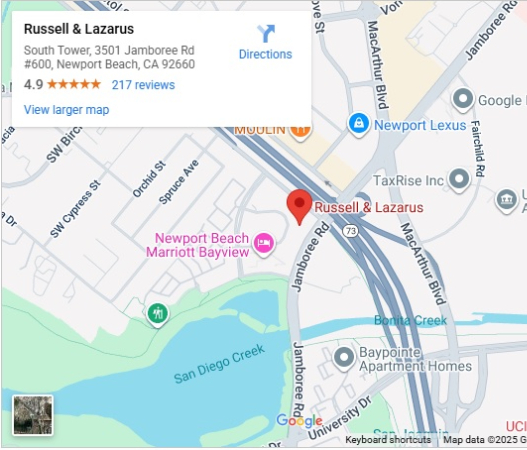
Russell & Lazarus APC represents people injured in slip, trip, and fall accidents throughout Newport Beach and Orange County. The Newport Beach office is located at South Tower, 3501 Jamboree Road, Suite 600, Newport Beach, CA 92660. Contact Russell & Lazarus APC or call (949) 851-0222 to discuss a potential premises liability claim.
Speak With a Newport Beach Slip and Fall Lawyer
A slip and fall involving a public sidewalk, building-code violation, leased property, workplace, or multiple responsible parties can require an extensive investigation. Surveillance footage, inspection records, contracts, repair documents, and physical evidence should be preserved before they are lost or altered.
If you or a family member was injured on dangerous property in Newport Beach or elsewhere in Orange County, contact Russell & Lazarus APC’s Newport Beach office at (949) 851-0222 to discuss the accident and your legal options with an experienced Newport Beach slip and fall attorney.
This information is provided for general informational purposes only and does not constitute legal or medical advice; filing deadlines, liability, damages, insurance coverage, and available legal options depend on the specific facts and circumstances of each case.



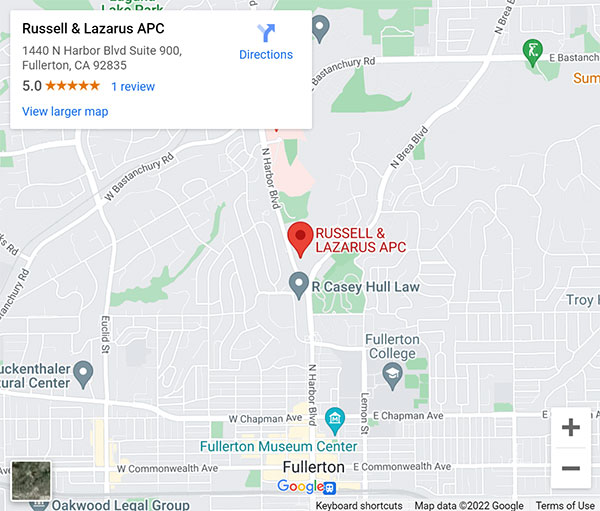
Locations
Phone: (949) 851-0222
Toll-Free: (877) 789-4878
South Tower, 3501 Jamboree Rd #600,
Newport Beach, CA 92660
Phone: (951) 485-4000
Toll-Free: (877) 789-4878
Grandville Executive Suites
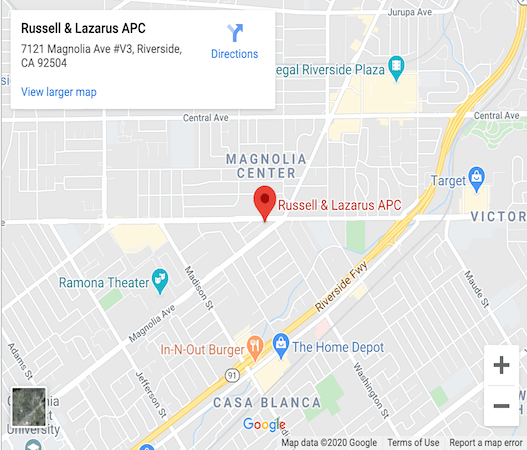
7121 Magnolia Ave., #V3
Riverside, CA 92504
Phone: (949) 426-7299
Toll-Free: (877) 789-4878
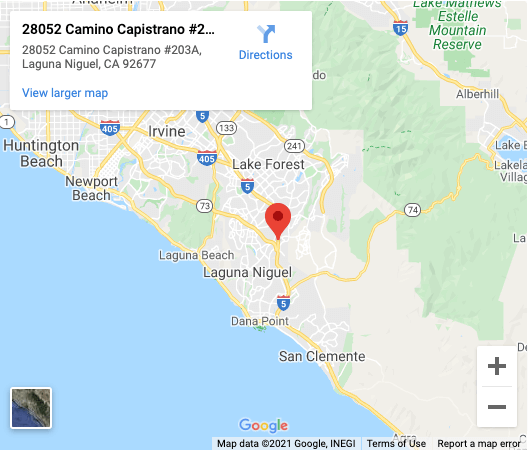
28052 Camino Capistrano, Suite 203A
Laguna Niguel, CA 92677
Phone: (949) 309-0990
Toll-Free: (877) 789-4878
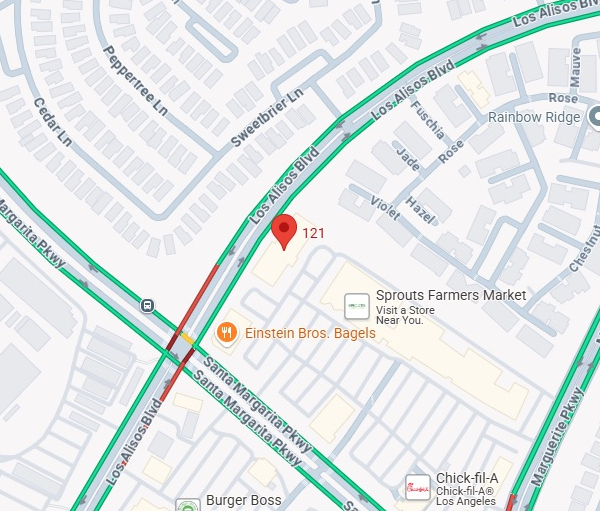
27725 Santa Margarita Parkway, Suite 121 Mission Viejo, CA 92691