
Russell & Lazarus Attorneys Secure $19.18 Million Jury Verdict for Truck Driver Injured by Electrified Security Fence
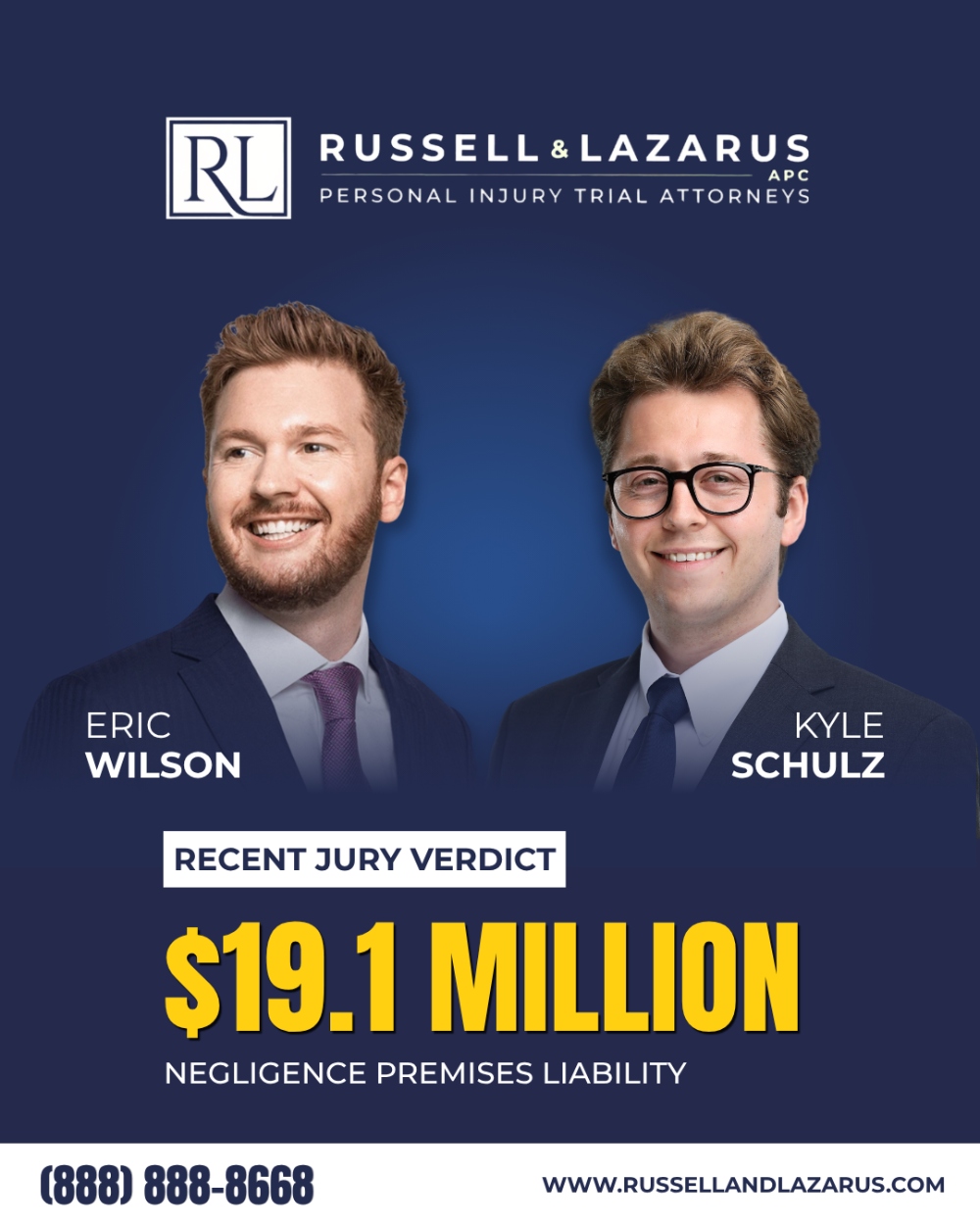
Russell & Lazarus trial attorneys Eric Wilson and Kyle Schulz secured a $19,186,137 jury verdict in Los Angeles County on behalf of Michael Clayton, a commercial truck driver who suffered severe cardiac injuries after coming into contact with an electrified security fence at a commercial trucking facility.
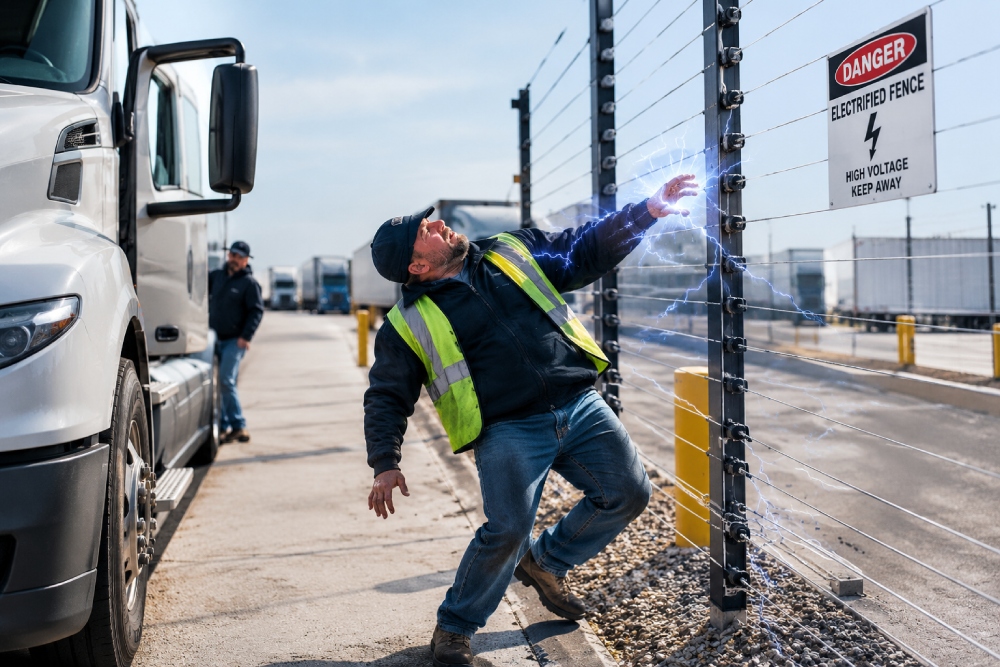
The case involved a dangerous condition at a trucking yard where an electrified security fence had been installed only months before the incident. Truck drivers were required to park their vehicles within feet of the fence, placing workers in close proximity to an electrical hazard as they routinely entered and exited their trucks.
The jury ultimately rejected the defense’s position that Clayton’s cardiac condition was unrelated to the electrical incident and found the defendants responsible for the consequences of his injuries.
Electrical Shock Causes Life-Altering Injuries
On June 17, 2021, Michael Clayton was working at a commercial trucking yard when he came into contact with an electrified security fence while speaking with a co-worker.
The electrical shock violently threw Clayton forward. He struck his truck before hitting the fence a second time. He then collapsed to his hands and knees, disoriented and struggling to understand what had happened.
What initially appeared to be an electrical accident ultimately resulted in serious and permanent medical consequences.
Following the incident, Clayton developed severe cardiac dysfunction. His condition required the surgical implantation of a cardiac resynchronization pacemaker and defibrillator.
Today, Clayton continues to face significant cardiac complications and the possibility of requiring a future heart transplant.
Dangerous Fence Was Located Near Workers
A significant issue in the case was the location of the electrified security fence.
The fence had been installed at the commercial trucking facility only months before Clayton’s injury. Truck drivers were expected to park their vehicles within close proximity to the fence, meaning workers routinely had to enter and exit their trucks near the electrified barrier.
Placing potentially dangerous electrical equipment in an area workers routinely occupied raised important questions about whether adequate precautions protected people from foreseeable contact with the fence.
At trial, Russell & Lazarus attorneys Eric Wilson and Kyle Schulz presented evidence concerning the condition of the property, the circumstances surrounding Clayton’s electrical shock, and the medical consequences that followed.
Defense Claimed Heart Condition Was Unrelated
One of the central disputes at trial involved the relationship between the electrical injury and Clayton’s subsequent cardiac deterioration.
The defense argued that Clayton’s heart condition was unrelated to the electrical incident and characterized the timing of his cardiac problems as a coincidence.
Wilson and Shulz challenged that argument with evidence presented at trial.
The jury heard testimony from eyewitnesses who described the incident, as well as physicians and engineering experts who addressed the electrical event, Clayton’s injuries, and the medical complications that followed.
After weeks of testimony, the jury rejected the defense’s arguments and held the defendants accountable.
The jury awarded Clayton $19,186,137.
$19.18 Million Verdict Recognizes Catastrophic Medical Consequences
The verdict reflects the serious and continuing consequences of Clayton’s electrical injury.
His cardiac dysfunction required major medical intervention, including the implantation of a cardiac resynchronization pacemaker and defibrillator. His condition also leaves him facing the possibility of additional significant medical treatment in the future, including a potential heart transplant.
The case demonstrates that the consequences of an electrical injury can extend far beyond the initial event. A person who survives an electrical shock may face substantial medical complications and long-term changes to their health and quality of life.
For Clayton, an ordinary workday resulted in a serious injury that continues to affect his health and his future.
The Importance of Workplace Safety Around Electrical Hazards
Businesses and property operators must consider the safety of people required to work around potentially dangerous equipment.
Electrical security fences and other specialized systems may serve important purposes, but installing and placing them requires careful consideration when employees, contractors, truck drivers, or other workers routinely operate nearby.
When a dangerous condition exists in an area where workers are expected to perform their jobs, reasonable safety precautions can be critical.
The Clayton case illustrates the potentially devastating consequences of a worker’s exposure to an electrical hazard in a commercial environment.
Russell & Lazarus Trial Attorneys Fight for Injured Clients
Eric Wilson and Kyle Schulz of Russell & Lazarus represented Michael Clayton in the case and presented evidence regarding both the circumstances of the electrical injury and the severe cardiac complications that followed.
Cases involving catastrophic injuries can involve complex medical and engineering issues. Establishing what happened, determining how an injury occurred, and demonstrating the full extent of a person’s medical consequences can require testimony from multiple types of experts.
In Clayton’s case, the jury heard evidence from eyewitnesses, physicians, and engineering experts before reaching its verdict.
The resulting $19,186,137 Los Angeles County jury verdict recognizes the severity of Clayton’s injuries and the significant medical challenges he faces as a result of the incident.
What This Electrical Injury Case Means for Workers
Electrical injuries can have serious consequences, particularly when exposure occurs unexpectedly in a workplace or commercial environment.
Workers may encounter electrical hazards around construction sites, industrial facilities, trucking yards, warehouses, manufacturing facilities, utility infrastructure, and other commercial properties.
Employers, property owners, operators, and other responsible parties may have obligations to identify dangerous conditions and take appropriate steps to protect people who are required to work around them.
When those responsibilities are not met, and a worker suffers a catastrophic injury, determining who may be legally responsible can require a detailed investigation of the circumstances.
A $19.18 Million Result for Michael Clayton
The $19,186,137 verdict provides recognition of the profound impact the June 17, 2021 electrical incident has had on Michael Clayton’s life.
His injuries have required significant medical treatment, including implantation of a cardiac resynchronization pacemaker and defibrillator, and he continues to face serious cardiac complications and the possibility of a future heart transplant.
The verdict also reinforces the importance of maintaining safe working environments when dangerous electrical equipment is installed near areas where workers routinely perform their jobs.
Russell & Lazarus attorneys Eric Wilson and Kyle Schulz‘s successful representation of Clayton demonstrates the importance of thorough preparation and presentation of medical, engineering, and eyewitness evidence in catastrophic injury litigation.
Case Results Disclaimer
Every case is different, and past results do not guarantee or predict similar outcomes in future cases. The result described above is based on the specific facts and circumstances of this matter.