
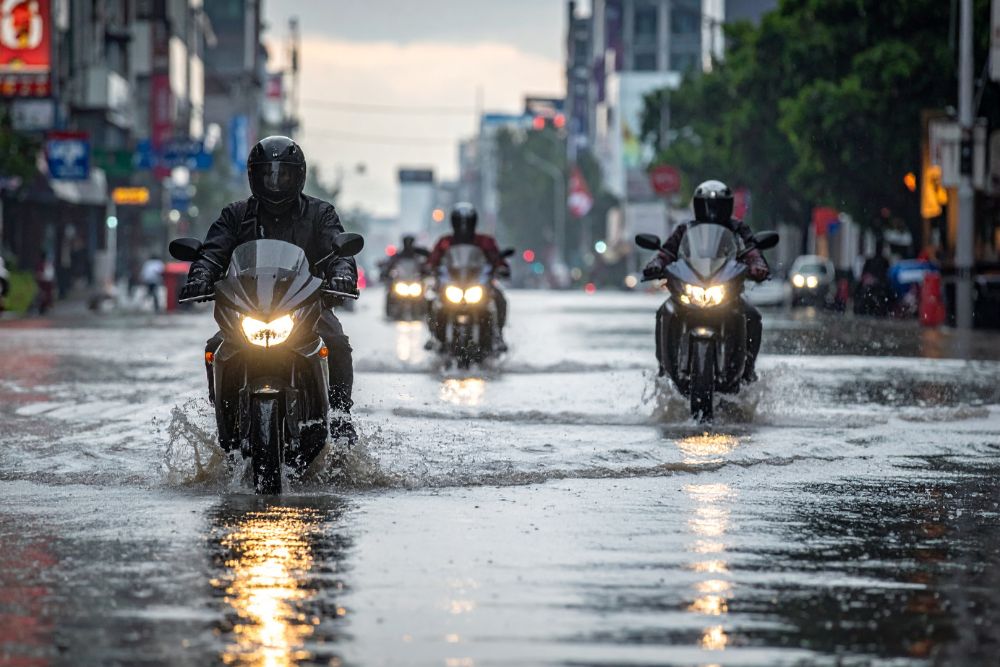
How Do Weather Conditions Affect Motorcycle Accident Liability
Motorcyclists in California face unique risks when the weather changes. Rain, fog, high winds, and slick or uneven pavement can turn an ordinary ride into a serious hazard in just a few seconds. After a crash, many people assume that bad weather alone is to blame and that no one can be held responsible. In reality, weather is only part of the story. California law still requires every driver and rider to use reasonable care, which means adjusting speed, following distance, and visibility to match current conditions.
When a motorcycle accident happens in poor weather, liability usually depends on how each person responded to those conditions. Did a driver slow down in heavy rain, turn on headlights when visibility dropped, and give extra space to nearby riders Or did they continue to drive as if the road were dry and clear The answers to these questions often matter more than the weather itself. Understanding how California law treats weather and motorcycle accidents can help injured riders protect their rights and pursue fair compensation.
Why Weather Conditions Matter In California Motorcycle Accident Cases
Weather conditions affect motorcycles more dramatically than larger vehicles. Motorcycles are lighter, rely on a much smaller contact patch with the road, and are more vulnerable to sudden loss of traction. A thin film of water, oil, or gravel that a car can roll through may cause a motorcycle to slide or tip.
From a legal perspective, weather becomes part of the overall context for determining negligence. California courts and insurance adjusters do not look at weather in isolation. Instead, they ask whether each driver or rider behaved as a reasonably careful person would under those specific conditions. If a motorist continues to drive at highway speed through heavy rain or fog without headlights or enough following distance, the presence of bad weather can actually strengthen the argument that they were driving unsafely.
In other words, rain, fog, wind, or slick pavement generally increase the level of care expected, rather than excusing careless driving. When a driver or rider ignores obvious weather risks, that failure can be a central part of a negligence claim.
California Laws That Shape Liability In Bad Weather
Several California traffic laws directly affect how fault is analyzed when weather plays a role in a motorcycle crash. These laws do not mention motorcycles exclusively, but they set the standards that all road users must follow.
California Basic Speed Law
California’s Basic Speed Law appears in
California Vehicle Code section 22350. It states that no person may drive a vehicle at a speed greater than is reasonable or prudent having due regard for weather, visibility, traffic, and the condition and width of the highway.
This is important in weather related motorcycle crashes because it means:
- A driver can be at fault even if they were under the posted speed limit, if that speed was unsafe for rain, fog, or slick pavement.
- Investigators may look at how heavy the rain was, whether there was standing water, and how far drivers could see ahead when deciding whether speed was reasonable.
- Evidence that a driver was traveling too fast for conditions can support a finding that they violated section 22350 and acted negligently.
For motorcyclists, this law cuts both ways. It can support a claim against a speeding or careless driver, but it also means riders should be prepared to show that they adapted their own speed to the conditions as well.
Headlight And Visibility Rules
Visibility in bad weather is crucial, especially for motorcycles, which are already harder to see. California requires proper lighting in darkness and in certain kinds of inclement weather.
For most vehicles,
California Vehicle Code section 24400 requires the use of lighted headlamps during darkness and in inclement weather when visibility is limited. California law also makes it unlawful to drive without required lights during darkness under
Vehicle Code section 24250.
In practice, this means:
- Drivers should have headlights on at night and whenever weather makes it hard to see other vehicles or people at a distance.
- Failure to use headlights in heavy rain or fog can be evidence of negligence, especially if a driver later claims they simply did not see the motorcycle.
Motorcycles have their own headlight requirements, and a rider who uses a working headlight, reflective gear, and proper signals can show they did their part to remain visible. If a crashing driver did not use required headlights in low visibility, that failure can weigh heavily against them in a liability analysis.
Helmet Requirements For Riders
California has a universal motorcycle helmet law. Under
California Vehicle Code section 27803, both the driver and any passenger on a motorcycle must wear an approved safety helmet.
Helmet use is important for two reasons:
- It protects the rider from more severe head injuries, which can be especially likely when a motorcycle loses control on wet or slippery pavement.
- In an injury claim, compliance with the helmet law shows that the rider was acting responsibly and following safety rules, which can help counter arguments that the rider was careless.
A rider who does not wear a helmet may still have a claim, but the defense may argue that some injuries were made worse by the lack of proper protection. For riders who do follow the law, this issue is less likely to complicate liability in a weather related crash.
Lane Splitting In California Weather Conditions
California is one of the few states where lane splitting is expressly recognized.
California Vehicle Code section 21658.1 defines lane splitting as riding a motorcycle between rows of stopped or moving vehicles in the same lane.
Lane splitting itself is not automatically considered negligent. However, in bad weather, investigators may consider:
- Whether the rider was lane splitting at a reasonable speed difference compared to surrounding traffic.
- Whether a driver checked mirrors and blind spots before changing lanes in rain or fog.
- Whether the overall conditions, including wet pavement or low visibility, called for extra caution on both sides.
Lane splitting must still be done safely and in compliance with other traffic laws. In a weather related crash, liability may depend on whether both the rider and the driver behaved prudently in light of the conditions.
Common Weather Hazards For Motorcyclists In California
California’s climate includes everything from heavy coastal fog to sudden rain showers and gusty canyon winds. Each type of weather presents different dangers for riders.
Rain And Wet Pavement
Rain is one of the most frequent contributors to motorcycle crashes. It affects both traction and visibility.
- Slick surfaces: Oil and debris build up on road surfaces during dry periods. The first rainfall often lifts these substances and makes the pavement extremely slick.
- Hydroplaning risk: Standing water on freeways or in low spots can cause a motorcycle to hydroplane, especially at higher speeds.
- Reduced braking ability: Wet brakes and tires require more distance to stop safely, which makes tailgating and sudden lane changes particularly dangerous.
When a driver follows too closely behind a bike or continues at highway speed in heavy rain, that behavior can violate the Basic Speed Law and support a finding of negligence.
Fog And Low Visibility
Fog is common along the coast and in certain inland valleys. It can severely reduce the distance a driver or rider can see down the road.
- Shorter sight distance: Safe driving in fog requires reduced speed and greater following distance. Failing to adjust can be considered unreasonable.
- Headlight use: Drivers and riders should use low beam headlights in fog to increase visibility without creating glare. Failure to use lights properly can be a factor in assigning fault.
- Reaction time: Sudden braking in dense fog can trigger chain reactions, especially when drivers do not leave enough space in front of them.
In a motorcycle crash, a driver who sped through fog or drove without proper lights may be found negligent, even if the fog made seeing the bike more difficult.
High Winds And Gusts
High winds are particularly challenging for motorcycles because bikes are lighter and more sensitive to crosswinds.
- Crosswind drift: Strong gusts can push a motorcycle sideways within a lane or toward adjacent traffic.
- Passing large vehicles: Trucks, buses, and vans can create wind tunnels that buffet a rider, especially when passing in close proximity.
- Bridges and open areas: Elevated roadways and open stretches of highway intensify crosswinds and require extra caution.
Drivers should allow more room around motorcycles and avoid cutting in front of or crowding them in windy conditions. If a driver abruptly passes or changes lanes near a rider during strong crosswinds and causes a collision, wind does not excuse that decision.
How Negligence Is Evaluated When Weather Is Involved
Even when weather clearly plays a role, negligence analysis still follows familiar steps. California law requires plaintiffs to prove duty, breach, causation, and damages. Weather affects how each of these elements is viewed.
Duty Of Reasonable Care Under The Circumstances
Every driver and rider in California has a duty to use reasonable care. In poor weather, that duty typically includes:
- Reducing speed below the posted limit when conditions make full speed unsafe.
- Using headlights, turn signals, and brake lights correctly.
- Leaving extra space between vehicles to account for longer stopping distances.
- Avoiding sudden lane changes, hard braking, and other abrupt maneuvers that become more dangerous on wet or icy roads.
Failure to meet this standard, especially when Basic Speed Law and headlight rules apply, can be strong evidence of negligence.
Breach, Causation, And Damages
To recover compensation, an injured motorcyclist must show that another party breached their duty of care, that this breach caused the crash, and that real damages resulted.
For example:
- A driver continues at full freeway speed in heavy rain despite poor visibility and wet pavement.
- They follow a motorcycle too closely and cannot stop in time when traffic slows.
- They rear end the rider, causing injuries, medical bills, lost income, and lasting pain.
Even though rain contributed to the hazard, the crash still stems from a breach of the Basic Speed Law and failure to maintain a safe following distance.
Comparative Fault In California
California uses a pure comparative negligence system. This means that an injured rider can recover compensation even if they share some responsibility for the crash. The total recovery is reduced by the rider’s percentage of fault.
In a weather related accident, fault might be divided if:
- The driver was speeding in the rain or fog and failed to use headlights.
- The rider was lane splitting at a higher speed than surrounding traffic or using worn tires in slick conditions.
The key point is that weather does not automatically bar a claim. Instead, it influences how responsibility is allocated between the parties.
Evidence That Helps Prove Fault In Bad Weather Crashes
Because insurance companies often argue that weather alone caused a motorcycle crash, strong evidence is especially important in these cases.
Scene Evidence And Documentation
Useful evidence can include:
- Photographs and video: Images showing wet pavement, standing water, fog, skid marks, traffic conditions, and damage to vehicles help document the environment and how the crash occurred.
- Weather records: Official weather data can confirm rain, fog, wind speed, and temperature at the time and place of the collision.
- Vehicle inspections: Examining headlight function, tire condition, and brake systems can show whether vehicles were reasonably maintained and operated.
These details can help explain why the crash happened and whether a driver was traveling at a safe speed or using proper lights in compliance with California law.
Witnesses And Expert Analysis
Witness and expert input often strengthens a weather related motorcycle claim:
- Eyewitnesses: Other drivers, passengers, or bystanders may describe excessive speed, tailgating, lane changes, or lack of headlights.
- Police reports: Officers often note weather conditions, visibility, and any suspected violations of Vehicle Code provisions such as section 22350.
- Accident reconstruction experts: Professionals may analyze timing, braking distances, and collision patterns to show that a driver was unsafe for the conditions.
Together, these sources help counter simplistic arguments that “the weather did it” and instead highlight the human choices that led to the crash.
Insurance Company Arguments And How To Counter Them
Insurance adjusters often use weather as a way to reduce or deny motorcycle claims. They may argue that:
- The crash was an unavoidable act of nature, so no one is at fault.
- The rider should have stayed home rather than ride in the rain, fog, or wind.
- Visibility was so poor that the driver could not reasonably see the motorcycle.
These arguments overlook California’s Basic Speed Law and other safety requirements. A careful legal response will point out that:
- Drivers must adjust their speed and following distance for weather and visibility.
- Headlight and helmet laws exist to improve safety, and compliance by the rider supports their claim of reasonable care.
- Evidence such as speed estimates, phone records, or witness statements may show that a driver was distracted or careless even before weather became a factor.
A detailed investigation often reveals that the collision was not simply a matter of bad luck, but the result of preventable choices.
Protecting Your Rights After A Weather Related Motorcycle Accident
After a motorcycle crash in poor weather, it can be easy to assume that nothing can be done. However, you should not accept blame or a low settlement offer without understanding your rights under California law.
If you are able, steps that may help protect your claim include:
- Calling law enforcement so that a report documents the crash, weather, and visible conditions.
- Seeking medical care promptly, even if symptoms seem mild at first, since some injuries worsen over time.
- Taking photographs or video of the scene, vehicles, road surface, and sky conditions.
- Gathering contact information for witnesses who saw the collision or the behavior of other drivers beforehand.
- Avoiding detailed statements to insurance adjusters until you have spoken with an attorney.
Consulting an experienced California motorcycle accident lawyer can help you understand how the Basic Speed Law, headlight rules, lane splitting guidelines, and comparative negligence apply in your specific case.
Conclusion
Weather can make riding a motorcycle in California more challenging, but it does not erase legal responsibility. Rain, fog, wind, and slick pavement are factors that increase the duty of care for everyone on the road. California laws such as
Vehicle Code section 22350 on speed,
section 24400 on headlights,
section 27803 on helmet use, and
section 21658.1 on lane splitting help set clear expectations for safe behavior in changing conditions.
When drivers ignore these rules or fail to adjust their driving for the weather, they can still be held liable for the harm they cause to motorcyclists. With careful investigation, strong evidence, and knowledge of California law, many weather related motorcycle accidents turn out to be preventable events rather than unavoidable acts of nature.
If you or a loved one has been injured in a motorcycle crash that occurred in poor weather anywhere in Southern California, you do not have to face the insurance company on your own. The attorneys at Russell and Lazarus understand how to analyze weather conditions, apply California law, and build compelling cases for injured riders.
Call us at (949) 851-0222 to schedule a consultation and learn more about your options after a weather related motorcycle accident.