
Why So Many Orange County Motorcycle Accidents Happen at Intersections
Orange County motorcycle accidents at intersections are among the most dangerous crashes riders face. Intersections bring together turning vehicles, cross traffic, pedestrians, and changing signals, and a motorcycle’s small profile makes it easy for other drivers to overlook. When a driver fails to yield, the rider usually suffers the most serious injuries.
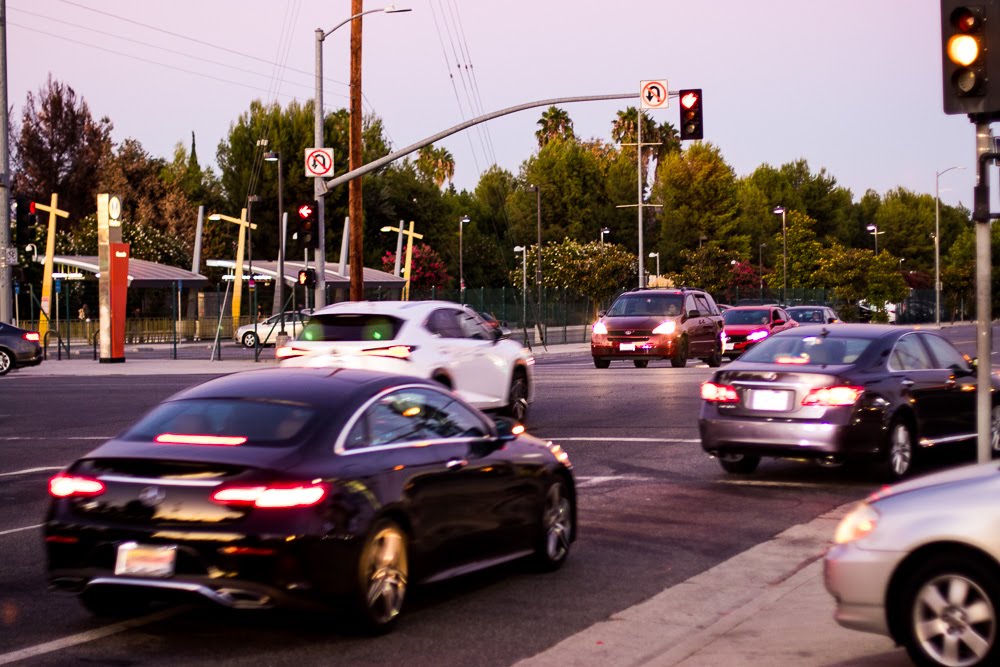
Why some Orange County roads jog before intersections
A recent article appeared in the Orange County Register that addressed the occasional strange jogs or kinks in some roadways, especially before intersections. While the answer has to do with orderly road grids fitting to the curvature of the planet (and there’s not much we can do about that), motorcyclists and other motorists in Orange County should be aware that intersections are the most common place for accidents—especially if the roadway features an unexpected abnormality.
This guide explains why intersection crashes happen, which California right-of-way rules apply, how fault is decided, and what injured riders can do to protect their claims.
Why are intersections so dangerous for motorcyclists?
Many of Orange County’s busiest roads, such as Harbor Boulevard, Beach Boulevard, Brookhurst Street, and Jamboree Road, cross other major streets at wide, multi-lane intersections. Riders at these locations face several recurring risks.
- Left-turning vehicles. A driver turning left across oncoming traffic misjudges the speed or distance of an approaching motorcycle, or does not see it at all.
- Drivers pulling out from side streets. A vehicle entering from a stop sign or driveway cuts across the rider’s path.
- Red light running. A driver speeds through a yellow or red signal into the intersection.
- Rear-end collisions. A distracted driver fails to stop behind a motorcycle waiting at a light.
- Right turns and lane changes. A driver turns right or changes lanes near the intersection without checking for a motorcycle beside them.
Visibility is a common thread. A driver may look in the rider’s direction and still fail to register the motorcycle, especially at dusk, in glare, or when the motorcycle is partly hidden by another vehicle.
What California right-of-way rules apply at intersections?
| Rule | What it requires |
|---|---|
| Vehicle Code section 21801 | A driver turning left must yield to oncoming traffic that is close enough to be a hazard |
| Vehicle Code section 21800 | Sets right-of-way rules at uncontrolled intersections and four-way stops, including yielding to a vehicle that arrived first |
| Vehicle Code section 21453 | Requires drivers to stop for a red signal and limits right turns on red |
| Vehicle Code section 22350 | Prohibits driving faster than is safe for conditions |
A violation of a safety statute that causes the type of harm the statute was designed to prevent can support a presumption of negligence in a civil case. That can be powerful evidence in a left-turn or red-light crash.
How is fault decided in an intersection motorcycle crash?
Insurers often try to blame the rider by claiming the motorcycle was speeding, lane splitting unsafely, or hard to see. California follows pure comparative fault, so a rider’s compensation is reduced only by their own percentage of responsibility. Evidence that commonly helps establish what happened includes the following.
- The traffic collision report and any citations issued
- Traffic signal timing records from the city
- Video from traffic cameras, nearby businesses, dashcams, or helmet cameras
- Witness statements
- Vehicle damage patterns and accident reconstruction
- Data from vehicle event recorders
Video and signal data can disappear quickly, so it is important to act soon after the crash.
What injuries are common in intersection crashes?
Because riders are often struck from the side or thrown over the turning vehicle, intersection crashes frequently cause traumatic brain injuries, spinal injuries, broken bones, road rash, and internal injuries. California requires all riders to wear a helmet, and our article on motorcycle accidents and head injuries explains how helmet use and lane splitting can affect a claim.
What should you do after an intersection motorcycle accident?
- Get medical care right away, even if you feel able to ride away.
- Call the police so a report is prepared.
- Photograph the vehicles, the intersection, the signals, and any skid marks if you can.
- Get contact information from witnesses and the other driver.
- Do not give a recorded statement to the other driver’s insurer before talking with a lawyer.
- File an SR-1 report with the DMV within 10 days if anyone was injured or damage exceeded $1,000.
Most motorcycle injury lawsuits must be filed within two years, and claims involving a dangerous intersection design or signal malfunction against a public entity generally require an administrative claim within six months.
Talk With an Orange County Motorcycle Accident Lawyer
Russell & Lazarus APC represents injured motorcyclists throughout Orange County and California. We investigate intersection crashes, obtain signal and video evidence, and push back when insurers try to blame riders.
Our California offices serve clients in Fullerton, Laguna Niguel, Long Beach, Mission Viejo, Newport Beach, Riverside, Sacramento, and San Diego.
Call (877) 789-4878 or request a free case review.
FAQs
1. Who is usually at fault when a car turns left in front of a motorcycle?
Often the turning driver, because California requires left-turning drivers to yield to oncoming traffic that is close enough to be a hazard. Fault still depends on the specific facts, including the rider’s speed.
2. What if the driver says they never saw my motorcycle?
Not seeing a motorcycle is not a defense. Drivers have a duty to look and to see what is there to be seen.
3. Can I recover damages if I was speeding slightly?
Possibly. Under pure comparative fault, your compensation may be reduced by your share of responsibility, but it is not automatically eliminated.
4. How can I get traffic camera footage of my crash?
An attorney can send preservation requests to the city and nearby businesses. Many systems overwrite footage quickly, so prompt action matters.
5. Can a city be responsible for a dangerous intersection?
Sometimes. Claims involving dangerous road design or malfunctioning signals may be brought against a public entity, but an administrative claim must generally be filed within six months.
6. How long do I have to file a motorcycle accident lawsuit?
Most claims must be filed within two years of the crash under California law.
This article provides general information about California law as of November 20, 2026. Liability, insurance coverage, and deadlines depend on the facts of each case.